
Bolivia was a breath of fresh air after traveling through Uruguay, Argentina, and Chile. Don’t get me wrong. Uruguay, Argentina, and Chile are amazing, but they are also on the more expensive side of the travel budget. As I crossed into Bolivia, my amount of spending per day dropped substantially, making my overall South America budget look a lot nicer.
Like with all of my trips, I meticulously kept track of every cent that I spent. So here’s what I spent, along with some of my tips for creating your own Bolivia travel budget.
About My Trip to Bolivia
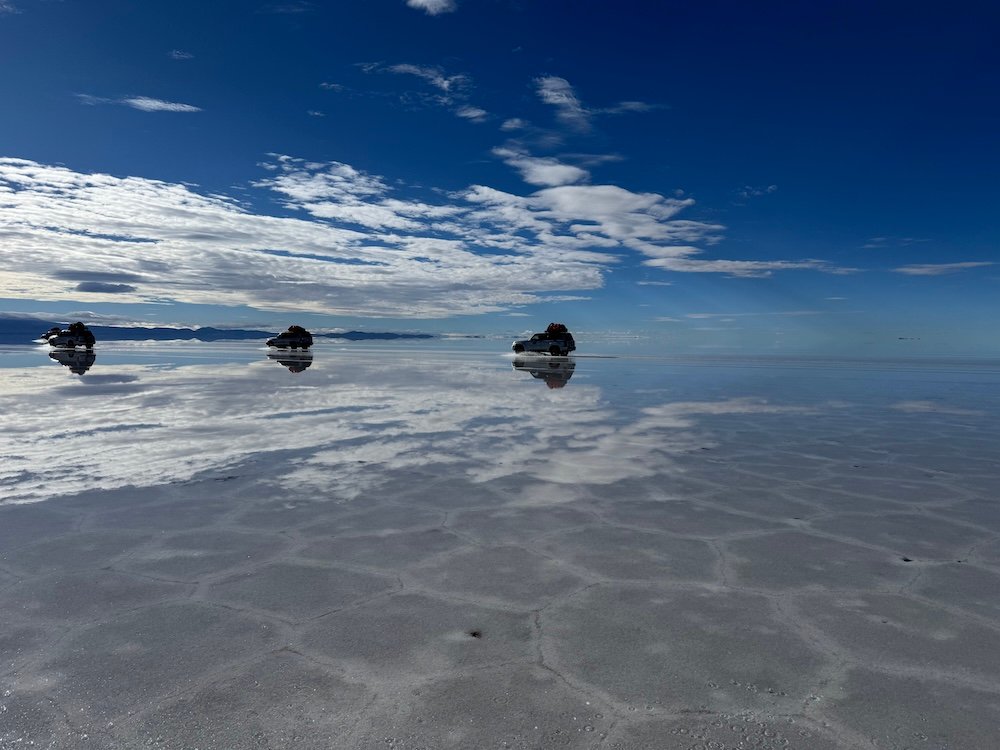
I spent just over three weeks in Bolivia, traveling from the south of the country to the north. I crossed into Bolivia from San Pedro de Atacama, Chile on a 3 day/2 night tour to the Uyuni Salt Flats. From there, I traveled on my own through Potosí, Sucre, La Paz, and Copacabana.
Throughout that time, I had long stops in both Sucre and La Paz. For Sucre, I gave myself an extra few days of chill time over the Easter weekend and in La Paz, I stayed because of all of the incredible day trips from the city.
I hit up many of the tourist hot spots in Bolivia, though I did skip Cochabamba and the Amazon region. Those had to be saved for another trip. But at the same time, I think I moved a bit slower than most travelers in Bolivia. It seemed like most travelers I talked to really only focused on Uyuni and La Paz (though of course there were plenty of exceptions).
About My Travel Style
As mentioned, my trip to Bolivia was part of a longer five month trip through South America, so budget was a concern. That said, I still paid for private rooms in nearly every place I visited. I’m just past the days of hostel dorm rooms and need my own space.
Only half of my hotels had breakfast, so I utilized the grocery store for breakfast and any snacks for later in the day. I typically ate out for one big meal each day.
For activities, I paid for a few, but indulged in many free activities to help balance my budget.
And lastly, I have to mention that I don’t drink alcohol or coffee. That’s a personal preference, but it also makes a huge impact on my travel budgets because I don’t have to account for those things.
An Important Note About Currency in Bolivia
Bolivia’s currency situation is a little messy at the moment. There’s the official exchange rate that you’ll get if you pay with card or withdraw money out of the ATM and an unofficial rate on the streets. At the time I visited, the official rate was 6.9 Bolivianos (BOB) per 1 USD. If you exchanged money on the street, you could get anywhere from 8 to 9 Bolivianos (or even more depending on where you changed) per dollar.
So, given that the value of the boliviano fluctuates so much, I’ll be using US dollars as a base for this post. The exchange rate I used for converting between Bolivianos and USD is 9 BOB per 1 USD.
How Much Did I Spend in Bolivia?
Note that I’ve rounded each value to the dollar, just to make things a bit more digestible. So if you look at the average cost per day and think it doesn’t quite line up, that’s why.
| Total Spent | Average Per Night (23 Nights) | |
| Hotels | $410 | $21 |
| Intercity Transportation | $63 | $3 |
| Subways/Buses/Ferries | $16 | $1 |
| Food | $114 | $5 |
| Activities | $588 | $26 |
| Miscellaneous | $5 | $1 |
| Total | $1196 | $54 |
Bolivia Travel Budget Breakdown
Sure, numbers are fine, but lets breakdown each of those categories further to give a little more detail. I’ll also give some ideas for ways you can adjust the budget, either to save money or to travel more luxuriously.
Hotels
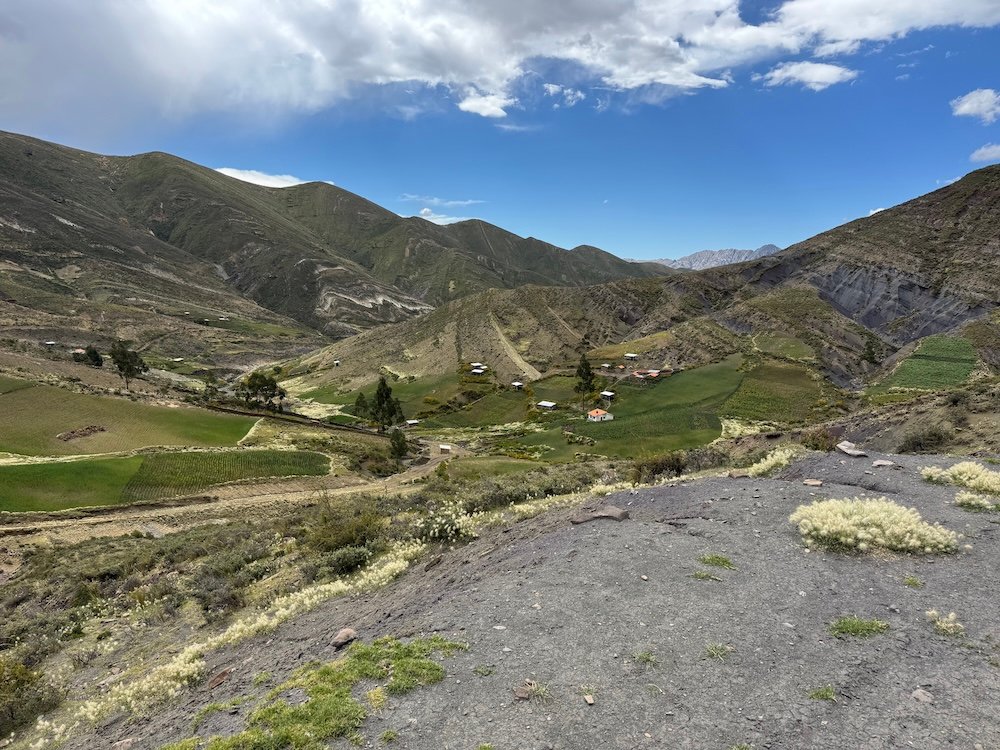
I spent a grand total of $410 on hotels during my time in Bolivia. Technically that comes out to $18 per night, but in reality, it’s closer to $21 per night. That $410 does not include the accommodation for my 3 day/2 night Uyuni Salt Flats tour and it doesn’t include my one overnight bus.
So what did $21 per night get me. Well, it was a private room in a decently rated hotel or hostel across five cities in Bolivia (Uyuni, Potosí, Sucre, La Paz, and Copacabana). All buy two nights included private bathrooms (my hotel in Potosí had a shared bathroom for two nights). Three hotels (Uyuni, Potosí, and Copacabana) included a free breakfast.
My cheapest stay was in Copacabana (at just under $18 per night) and my most expensive stay was in Sucre (just over $23 per night), so the rate for rooms didn’t vary too much based on my location.
Adjustments to the Budget
Budget travelers should look at hostel dorm beds. These will inevitably be cheaper than paying for a private room. A quick search on Hostelworld shows dorm beds for about $10 per night. However, if you’re traveling as a couple, it may be close to the same price for a private room than it is two hostel dorm beds.
Higher end travelers can go much higher than what I spent. I was happy with all of my accommodations, but I fully admit that I took budget options. In La Paz, my hostel was a 20 minute walk from the city center. In Potosí, I shared a bathroom. These are the tradeoffs I made to save some extra money for all of my activities.
Intercity Transport
I traveled by bus in Bolivia. There’s plenty of warnings online about safety on Bolivian buses, but I had no issues. That said, I always tried to find more reputable bus companies which likely resulted in me paying slightly more for my transportation. However, if that extra money means a bit more safety and peace of mind, I’m willing to pay that difference.
Here’s how my $63 for buses and taxis breaks down.
Uyuni to Potosí – $9
Potosí to Sucre – $5
Sucre to La Paz – $39 ** this was an overnight bus and doubled as accommodation
La Paz to Copacabana – $6 ** includes a $1 ferry ride to cross the straight of Tinquina
Note that often in Bolivia you will need to pay a terminal fee. This is not included in your ticket and must be purchased separately. In Uyuni, a worker came on to our bus to collect our money. In Sucre, there was a stand at the bus station that we were required to pay at. In Potosí, the terminal fee stand was unattended (and no one asked for it) and in La Paz, the cemetery “station” I used is by the side of the road so there was no fee.
In a few destinations, the bus station was just too far from my hotel so I utilized taxis. While I would have preferred Ubers because it takes the care of the communication issue, Uber didn’t exist in most cities and I wasn’t able to find a driver in La Paz. So I used taxis. Here’s what those costs were.
Taxi to Potosí Station – $3
Taxi to La Paz Cementario Station: $3
Adjustments to the Budget
If you’re following the same route I did, there’s not much you can do to get the budget lower. The only thing you could really do differently is skip the taxis (which I would not recommend in some cities), but that would have a very small impact on your budget.
On the other end of the spectrum, you could go higher. If you don’t want to take an overnight but, you can look into flying from Sucre to La Paz. Since I was traveling on a budget, the overnight bus made the most sense, but I can absolutely respect the decision of wanting a bed for a decent night’s sleep.
Subway/City Buses/Ferries
In general, I spent my days traveling on foot while in Bolivia and didn’t use much public transportation within cities. The exception was the ferry to Isla del Sol from Copacabana. It’s an island in Lake Titicaca, so walking isn’t really an option. It cost $15 round trip for the ferry.
The other $1 comes from a bus we took on my guided walking tour in Sucre. The bus cost less than $1, but rounding brings it all the way up to $1.
The bottom line is that if you can rely on walking within cities when you’re in Bolivia, which is a great budget saver.
Note that within La Paz, one of the popular things to do is to ride the cable car. I did ride the cable car, but did so on a tour of El Alto. The price for the cable car was built into the price of my tour, so it’s not listed here. Budget $1 per ride on the cable cars (though note that the actual price is cheaper).
Adjustments to the Budget
The biggest adjustment to the budget would be for some taxis or city buses within Sucre or La Paz. In Sucre, the only place that I went that was far was the bus station. I walked, but you could take a taxi. In La Paz, most of the tourist sites are walkable, but again, it’s possible to take a taxi.
Regardless of how much or who little you use public transportation for daily use, I don’t think you need to budget a lot.
Food
I spent $114 on food, which comes out to about $5 per day. I don’t think it can get that much cheaper. As always, I utilized a combination of restaurants (typically one meal per day) and grocery stores (to supplement any other hunger).
Here’s how this breaks down
Restaurants – $72 (17 meals)
Grocery Stores – $42
In Bolivia, I also had some food included on tours. On my 3 day/2 night tour to the Uyuni Salt Flats, all of our meals were included. That’s three breakfasts, three lunches, and two dinners. I took a cooking class in Sucre which counted as my meal out for the day. On some of my day trips (Maragua Crater from Sucre and Death Road in La Paz), at least one meal was included.
Adjustments to the Budget
For budget travelers, I don’t think you can go much lower than this. It’s probably technically possible, but I think this average of $5 is a very good starting point.
For travelers who want to eat more meals out (and rely less on grocery stores), I’d budget higher. I’d start at $10 per day, but you could go as high as you wanted. With $10 per day, I think you’d be able to eat two meals in a budget restaurant (this assumes you’re having breakfast at your hotel). With $15 per day, you can have your two meals per day but be less stressed about finding truly budget restaurants.
Activities
My activities budget likely seems a little high compared to the rest of my budget, but there’s a reason why I spent $588 in Bolivia.
By far, the biggest expense was my 3 day/2 night Uyuni Salt Flats Tour. This cost $218 before the extra fees. While this can seem like a lot, it includes all transportation (from my hostel in San Pedro de Atacama, Chile all the way to Uyuni, Bolivia), hotels for two nights (I was paired with other travelers in my small group of six), and all of my meals. What it did not include was entrance fees for national parks and hot springs, which totaled $27.
So given that, of the $588 I spent on activities in Bolivia, $245 of it was my Uyuni Salt Flats Tour. Was it expensive? Yes. Was it worth it? 100%.
That means that the rest of the budget was a more normal activities budget. I spent $343 during the rest of my time in Bolivia which comes out to roughly $17 per day. Sure that’s still a lot (it’s nearly as much as I spent on accommodation), but the whole point of traveling is to do things. So what did that $343 get?
Casa de la Moneda Museum in Potosí – $10
Guided Walking Tour in Potosí – $10
Guided Walking Tour in Sucre – $13
Cooking Class in Sucre – $38 (Since we cooked a meal, this also technically included meals for the day)
Maragua Day Trip from Sucre – $69 (included lunch)
San Felipe Convent Entrance Fee in Sucre – $3
Guided Walking Tour in La Paz – $10
El Alto Walking Tour in La Paz – $28 (included all of my transportation on the cable cars)
Moon Valley and Chacaltaya Day Trip from La Paz – $43
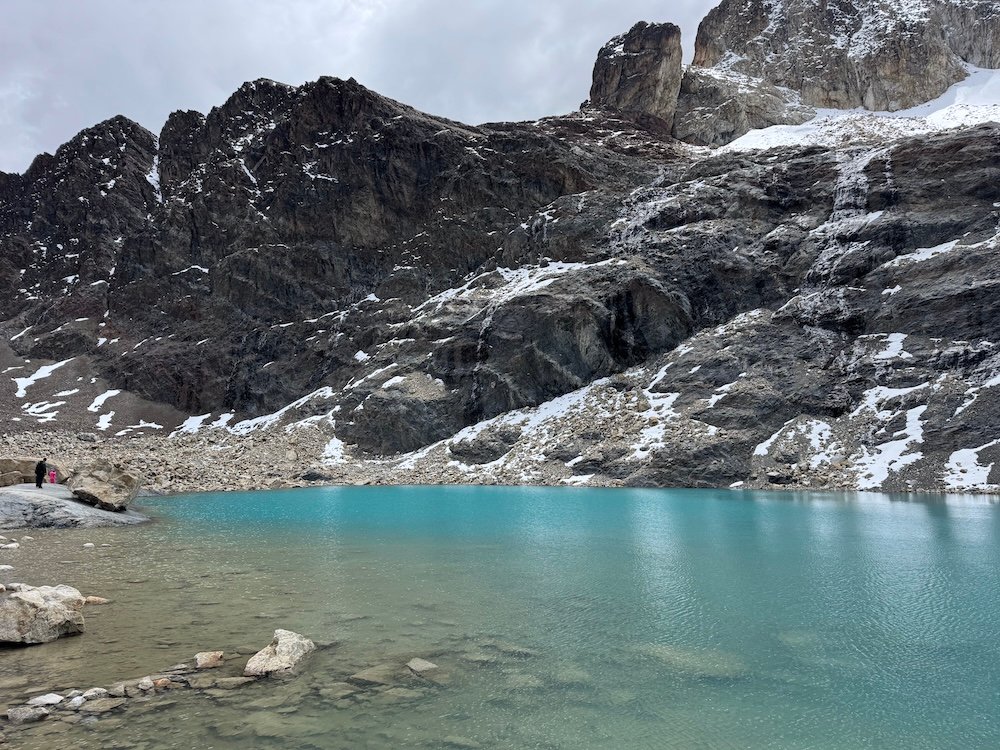
Charquini Day Trip from La Paz – $29
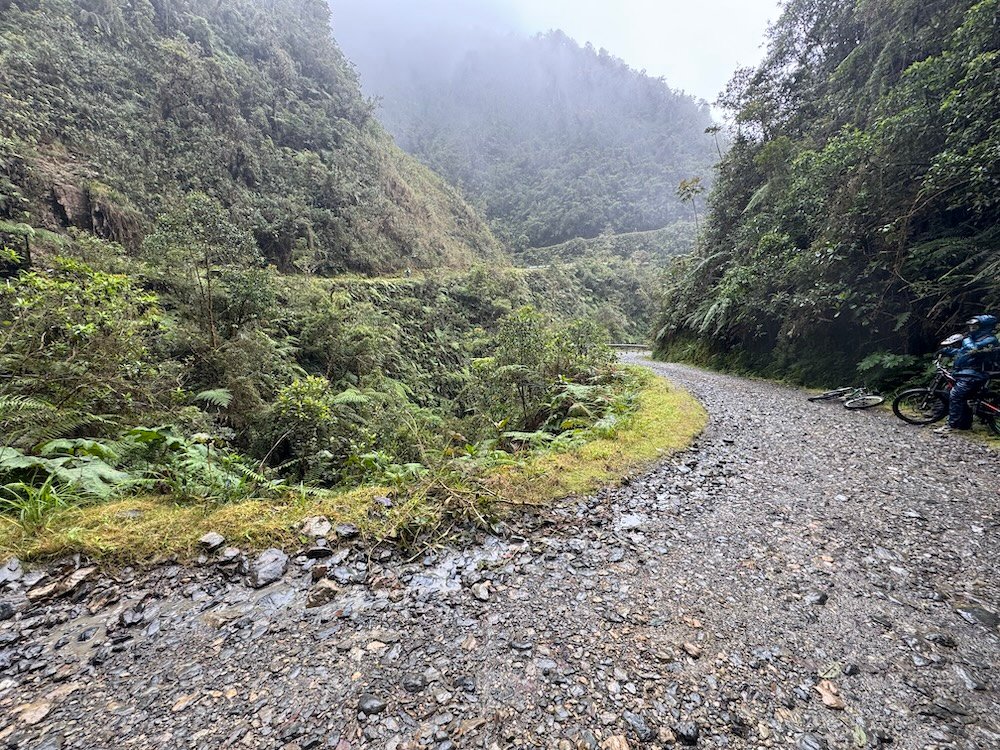
Death Road Biking Day Trip from La Paz – $92 (included breakfast and lunch)
Isla del Sol Entrance Fees – $4
Adjustments to the Budget
Obviously there’s lots of ways to change up this budget. The biggest is to cut down on the activities, or at least the big activities. This is one area where it will really depend on the traveler.
Miscellaneous
The entirety of my “Miscellaneous” budget was bathroom fees. Budget about 2 bolivianos to use public restrooms. It’s not a lot and it doesn’t really add up, but I think it’s important to be aware that most public restrooms will cost money.
A Reminder About Inflation
I traveled in April 2026, so the prices are accurate as of my trip. Prices change over time and it’s important to adjust any budget for inflation.
Final Thoughts
After a month in more expensive South American countries, it was great to be back in a place that was more budget friendly. My money definitely stretched further in Bolivia, and exchanging US dollars definitely helped, and allowed me to splurge on a few more activities. That was lovely.
Continue Your Adventure
Bolivia: In the capital city of La Paz, there’s no shortage of day trips including hiking at Chacaltaya Mountain, Charquini Lagoon, and Moon Valley. For adrenaline, bike down Death Road. Near Sucre, you can hike at the Maragua Crater. Halfway between Uyuni and Sucre is Potosí, which was once one of the richest cities in the world. In the very north, visit Copacabana and Isla del Sol on Lake Titicaca. And lastly, no trip to Bolivia would be complete without visiting the Uyuni Salt Flats. Learn even more in my Bolivia Travel Guide.
