
Potosí, Bolivia was once one of the richest cities in the world thanks to the silver mine in the nearby Cerro de Potosí. This mine has been active since colonial times, back when slaves worked the mines for the Spanish rulers. As the silver was extracted, it was minted into coins and shipped outside of the city. Potosí became rich, though today as you wander the streets, you might not necessarily believe it was once one of the richest cities in the world.
I’ll be the first to admit that Potosí isn’t my favorite city in Bolivia. I think Sucre is more interesting, the day trips near La Paz are more interesting, and the scenery near Uyuni is more spectacular. Still, many travelers, myself included add to their itineraries. Either they are looking to tour the silver mines or, like me, they are just trying to break up the journey between Uyuni and Potosí.
Regardless of why you’re visiting Potosí, here’s two options for how to spend one day in Potosí, Bolivia.
One Day in Potosí, Bolivia – 2 Options
One of the biggest draws to Potosí is the silver mines in Cerro de Potosí (also known as Cerro Rico). These are active silver mines but there are guided tours that will lead tourists in the mines. They boast about the chance to meet local miners and to see what it is actually like. To me, this feels pretty exploitative so I skipped it, but given that there’s several tour operators across the city offering mine tours, plenty of tourists still visit.
So, given that, I have different itineraries that you can choose from.
Option 1 – Exploring the City of Potosí
This first itinerary for one day in Potosí is based on what I did. Tour some museums in the morning and take a walking tour in the afternoon to learn more about the city.
Morning – Casa de La Moneda, Basilica, and Central Market
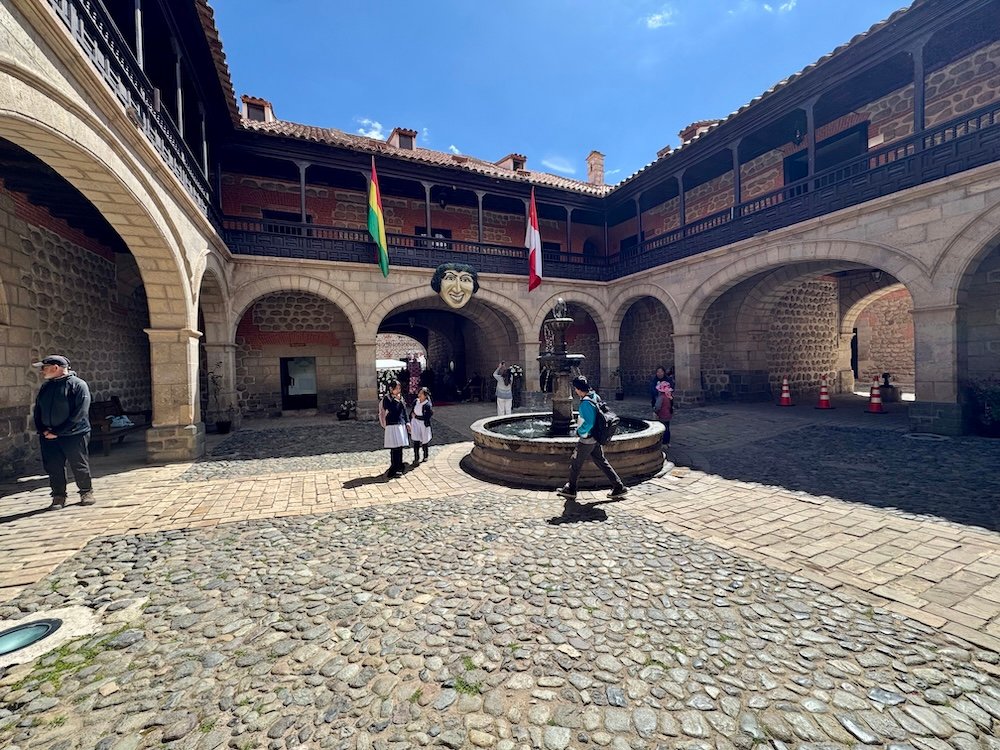
Start your morning off at 9:00 am at Casa de la Moneda. This is the former mint in Potosí where all of the silver coins that helped to make the city rich was founded. Inside you’ll see silver art pieces, religious art pieces, and the original machines that were used to make the silver coins.
There is something very important to note about visiting this museum and that is that you can only visit with a guided tour. The good news is that the tour is in English (though they also have French and Italian options), the bad news is that it is only offered a few times per day. If you speak Spanish, the tour is offered nearly every 30 minutes.
Your guide will lead you through the maze of the museum, pointing out the different exhibits and why they are important. While I always prefer to visit a museum myself, I don’t think you’d get much out of the museum by touring on your own. There’s only a few labels meaning you have to rely on your guide for context.
I read mixed reviews about the museum, but the negative reviews were mostly criticizing it for the price. I’ll admit that the price feels a bit steep by Bolivian standards, but it worked out to about $10 USD for a 90 minute guided tour of the museum, so honestly, I don’t think it was that bad. I learned about the city and it helped to fill in some of the gaps on my afternoon walking tour.
If you take the 9:00 am tour at Casa de La Moneda, you’ll have a bit of time to explore before lunch. You can stroll through the Central Market to get a glimpse at local life. Personally, I think Sucre’s Central Market is better, though I do have to admit that I was in Potosí during Semana Santa (Holy Week) and it seemed like half of the city was shut down.
Now you have a bit of a choice. Across Potosí, you’ll find churches, convents, and cathedrals. Many will offer a museum tour that includes a visit to the roof for a view of the city. Unfortunately for me, nearly all of these were closed during my visit, so I can’t definitively say which was is best or which is worth your time, but I’d recommend visiting at least one.
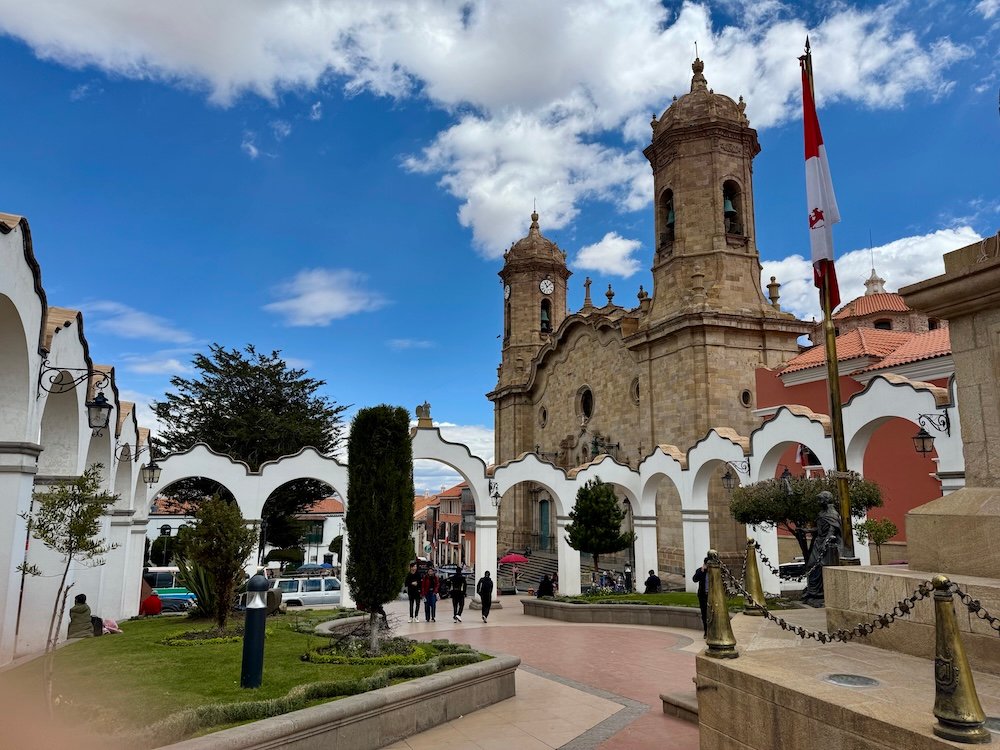
Nuestra Señora Basilica Cathedral Santiago Apostol de Potosí is right next to Casa de la Moneda and not too far from the Central Market. You won’t visit the actual roof, but you’ll be inside the bell tower for a close up look of the historic bells.
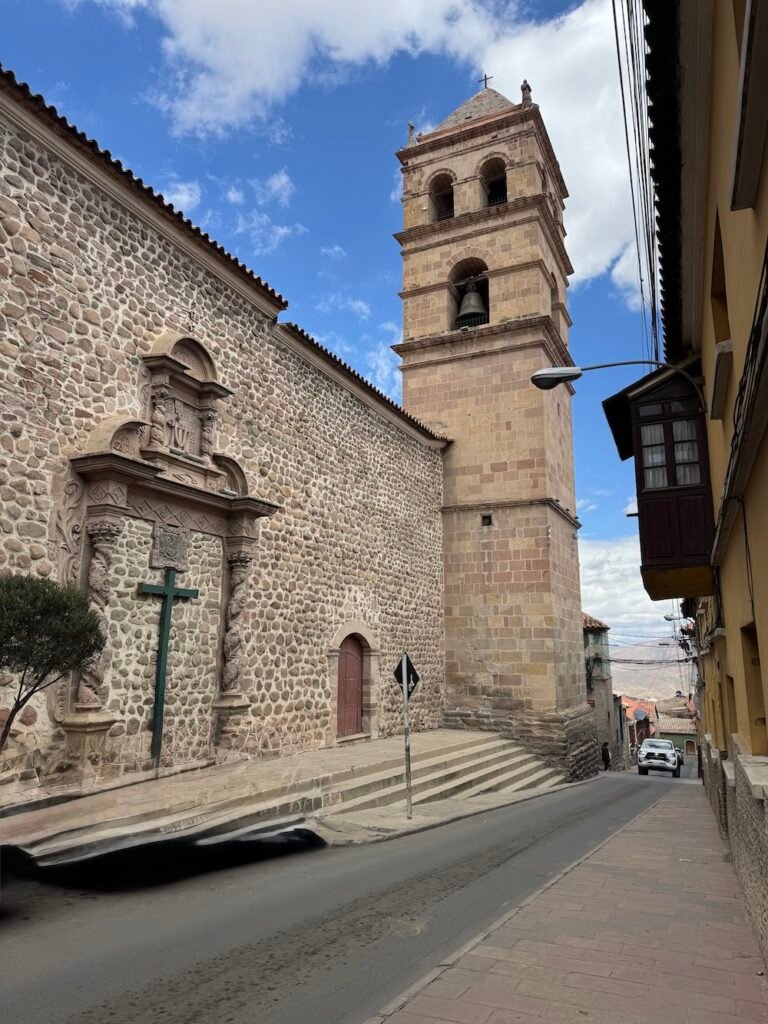
Iglesia Convento de San Francisco de Asís en Potosí is two blocks from the main square, but is another popular choice. The benefit of this museum is the roof also gives you a view of the Cerro Rico mountain.
These are not the only two churches you can visit, but probably the two most popular.
Lunch
In my opinion, Potosí is light on sights (unless you plan to tour every single church), so take a break and get some lunch before continuing with your sightseeing.
Afternoon – Walking Tour and Strolling the City
When I visited Potosí, I was fascinated by the idea that this used to be one of the richest cities in the world. I wanted to learn more about the city and how it went from the richest city in the world to what it is today, so I signed up for a walking tour. I’ll be the first to admit that it was just ok. Maybe it’s because I’ve gotten lucky and had some really fantastic walking tours in South America, but this one was just ok.
If you want to learn more about the city, though, I do recommend a walking tour. During my tour, we visited government buildings, the exterior of churches (most churches are closed—though our guide was delighted to find one open so ushered us inside), and to a nice viewpoint of the city. I’m not sure I got all of the context of the city that I wanted, but I still learned just a little bit more about the city.
For those not wanting to take a guided tour, spend your afternoon exploring the city. People watch in Plaza 10 de Noviembre and visit the exterior of many of the nearby churches. I’ll be the first to admit that there’s not a lot to do in this city, so take your time and see what you can find.
Option 2 – Mining Tour and A Bit of the City
If you’re interested in taking the mining tour at Cerro Rico, your day will look different. I think you can still cover parts of what I did in Potosí, but obviously, you’ll have to shuffle things around.
Morning – Mining Tour
Start the day with your mining tour. When you book, you will likely be picked up from your hotel. Then you’ll visit the market where you’ll pick up gifts for the miners before heading to the mine. Get dressed in your safety gear (make sure to book a tour company that provides adequate safety protection) and follow your guide into the mines. Be prepared for tight, claustrophobic spaces and some heartbreaking scenes (two people at my hotel told me about their experience on the tour and that was enough for me).
As I mentioned, I skipped the mine tour, but since there are plenty of people who take the tours, I have to include this as an option.
Lunch
Once back above ground and back in the city, grab some lunch before taking some time to see a bit more of Potosí.
Afternoon – Exploring the City
How you spend the afternoon is up to you. If it were me, I’d prioritize the Casa de la Moneda museum to see where that silver used to go (now it’s exported and not made into coins in Bolivia). Then spend some time walking around the city to see the churches and people watch in the main square.
Is One Day in Potosí, Bolivia Enough?
I think one day in Potosí is enough. I spent two nights here and I think that was just enough time. However, I happened to visit during Semana Santa (Holy Week) and many of the churches and museums and different or limited hours. Still, I think for most visitors, one full day in Potosí is enough. Could you find more to do? Absolutely, but I think there are better cities in Bolivia.
How to Get to Potosí, Bolivia
Potosí is well connected with other major cities in Bolivia.
From Uyuni, expect your bus to take anywhere from 4 to 5 hours. Buses to and from Uyuni use the Old Bus Station (Terminal Antigo). From here, it’s about a twenty minute walk to the main square. It’s totally walkable, but you’ll be walking uphill and you’ll be at 13,000 feet (nearly 4000 meters) of elevation. I arrived at my hotel huffing and puffing (and I wasn’t the only one).
From Sucre, it takes three to four hours to reach Potosí. Buses depart frequently and will utilize the new bus terminal (Terminal Nuevo). This is nearly an hour walk from the main square, so I recommend getting a taxi. My hotel told me to expect to pay between 10 and 15 bolivianos, but I was charged 20. I wasn’t going to stress the extra 50 cents.
From La Paz, you’ll be looking at an overnight bus as buses can take about 10 hours. Buses utilize the new bus terminal.
How to Get Around Potosí, Bolivia
First, I think it’s important to keep in mind that Potosí is one of the highest cities in the world, sitting at nearly 13,000 feet (nearly 4000 meters) above sea level. Go slow and don’t overexert yourself. Even stairs can cause you to huff and puff your way to the top.
I highly recommend trying to find accommodation within a few blocks of the main square (Plaza 10 de Noviembre). Once here, almost all of what you’ll want to see is within walking distance and you won’t have to worry about buses or taxis. That said, options are here if you need it.
Taxis are plentiful and I’m convinced I saw more taxis than non taxis on the streets of Potosí. Negotiate the price before getting in. For buses, I’d ask at your accommodation for advice. They are cheaper, but there’s no dedicated bus stops which can make it incredibly confusing for tourists.
Final Thoughts
As I’m sure you can tell, Potosí is not my favorite city in Bolivia. Still, I find it fascinating that this was once one of richest cities in the world and there’s a few interesting stops that are worth your time if you find yourself in Potosí, Bolivia.
Continue Your Adventure
Bolivia: In the capital city of La Paz, there’s no shortage of day trips including hiking at Chacaltaya Mountain, Charquini Lagoon, and Moon Valley. For adrenaline, bike down Death Road. Near Sucre, you can hike at the Maragua Crater. In the very north, along Lake Titicaca, you’ll find the beautiful Isla del Sol. And lastly, no trip to Bolivia would be complete without visiting the Uyuni Salt Flats. Learn even more in my Bolivia Travel Guide.
