
Southern Bolivia is home to the famous Uyuni Salt Flats, but there’s so much more to see here than just the incredible salt flats. As you cross the border from Chile into Bolivia, you’ll soon find yourself passing picturesque lagoons, flamingo colonies, jaw dropping rock formations, and even towering cacti. Plus, there’s a seemingly endless supply of llamas and vicuña.
During my South America trip, I needed to get from the Atacama Desert in northern Chile into Bolivia. Like so many other travelers, I signed up for a three day, two night tour to Uyuni, Bolivia. Starting in San Pedro de Atacama, Chile, we crossed into Bolivia. Over the next two days, we passed spectacular scenery before finally reaching the Uyuni Salt Flats in time for sunrise (and what a sunrise it was). The scenery was incredible and the journey was definitely interesting.
Here’s what my Uyuni Salt Flats Tour was like.
Booking Your Uyuni Salt Flats Tour
First and foremost, you need to book your tour. Some companies have a web presence, but in my experience, just because they have a website, doesn’t mean that they’ll respond to you (I’m still waiting for a response I sent a company six months ago). Instead, if you have the time, just book the tour when you’re in San Pedro de Atacama. Caracoles Street is lined with tour operators selling, not only tours of San Pedro de Atacama’s surroundings, but also to Uyuni.
There is one important thing to realize about the tours to Uyuni. Every tour is basically the same. You’ll go to the same viewpoints, stay at very similar hotels and eat very similar food. In addition, just because you booked a tour with one company in San Pedro de Atacama, doesn’t mean that that’s the company you’ll actually use. The Chilean tour company will take you to the border, but you’ll almost certainly transfer to a random Bolivian tour company.
So, I recommend shopping around to find the cheapest price. In San Pedro de Atacama, I was quoted 210,000 Chilean Pesos (CLP), 230,000 CLP, and 250,000 CLP. My hostel offered the tour for 200,000 CLP. Since every company is basically the same, I booked with my hostel and saved a bit of money. Another girl on my tour managed to get it for 190,000 CLP (though she said one place in town quoted her 300,000 CLP).
Your tour price should include everything except entrance fees. So hotels, driver, gas, and food should all be included. You’ll need to budget extra for the entrance fees (and whoever you book with should tell you this).
Lastly, note that unless you explicitly pay extra and work with your tour agency, your driver will only speak Spanish. I can get by and it was fine for me, but we also had one girl in our group who spoke Spanish and could help translate for us. That said, I wouldn’t count on having a fluent Spanish speaker in your group to translate.
Tour Groups for the Uyuni Salt Flats
Who is in your tour all depends on luck. Each car can hold seven people (one driver and six tourists). The good news is that it’s small groups. The bad news is that a bad group can ruin the trip.
My group was an interesting one. Everyone was very nice and we got along, but I’ll be the first to admit that we had communication issues.
I’m from the United States and am a native English speaker, but I can muddle my way through Spanish in a pinch. We had one woman from Chile, who obviously spoke Spanish, but could get by in English (I’d say her English was slightly better than my Spanish). Then we had an older German couple who could get by in English, but struggled with a few words here and there, a woman from Poland who spoke nearly fluent English, and a man from Brazil who spoke fluent Portuguese but struggled with both English and Spanish.
Needless to say, communication and language was not as easy for us as it was for other groups, but we managed to get by. The woman from Chile became our main translator with our driver, but I served as a translator anytime we needed something from another group. Plus, anytime there was any question about an English word or pronunciation, I was called on (though that means that my group will all be speaking with Wisconsin accents).
Like I said, we made it work and by dinner on the second night, we even managed to make a multilingual pun, but I’ll be the first to admit that it was difficult. Other groups got luckier. At our hotel there was a group that was all Israelis and another that was all Australians. They always seemed to be chatting while we had awkward lulls in our conversations. So really, it’s the luck of the draw for who is in your group.
Uyuni Salt Flats Tour from San Pedro de Atacama
Now that we’re through all of the logistics, here’s what a tour from San Pedro de Atacama to Uyuni really looks like.
Day 1 – Borders, Lagoons, Hot Springs, and Flamingos
The day starts early, though thankfully not as early as when I visited the Tatio Geysers in San Pedro de Atacama. Yes, I had to leave at 6:00 am, but it could have been worse. I was the first picked up and we spent the next 45 minutes driving around San Pedro de Atacama picking up other travelers. Unfortunately for the rest of us, one group was not ready and delayed us which was very annoying. Fortunately for me, we got split up into separate groups later in the day.
With everyone picked up, it’s time to drive to the Chile-Bolivia border. It sits at a very high altitude, so it’s pretty cold in the morning. I was wearing leggings and pants, plus a fleece and two jackets. Because we were a bit delayed, I think we missed the most of the cold (though there is no way it could be considered warm).
The Chilean border doesn’t open until 8:00, so we were given breakfast while we waited. And since we were one of the last vans to arrive, we had to wait for everyone else to go through the border first, but it could be worse and thankfully exiting Chile was a lot less painful than entering Chile.
Once we were all stamped out, we got back in the van and drove to the Bolivian border where we stood in line to get our passport stamped again. Luckily for me, Bolivia got rid of the visa for Americans at the start of 2026, so I got to wait in line with everyone else (and save $160 USD!). In total, it took us nearly an hour and a half to get through all of the immigration procedures (and that’s after waiting nearly two hours at the border to start the procedures).
Finally, we were stamped in, our bags were loaded onto our jeeps, and we could finally get going. As mentioned, we got split up. Each Chilean van holds 12 tourists, but the jeeps in Bolivia only hold six people. In our case, they put the six Israelis together and the other six of us went to another van.
It’s also worth noting that the tour company you booked with in San Pedro de Atacama may only take you as far as the Bolivian border. Then, when you move your bags from the van to the jeep, you meet your new guide who could be from any tour company in Uyuni. But since everyone does the same tour, it’s not a big deal which company you travel with.
Our first stop was uneventful and we went through customs in Bolivia. Thankfully, there’s just enough WiFi to fill out the online form (since no one had cell service). The second stop was also uneventful because it was just to pay our fee to enter the national park. You’ll be given a ticket for the national park. Do not lose it because they’ll check it at least two more times throughout the day.
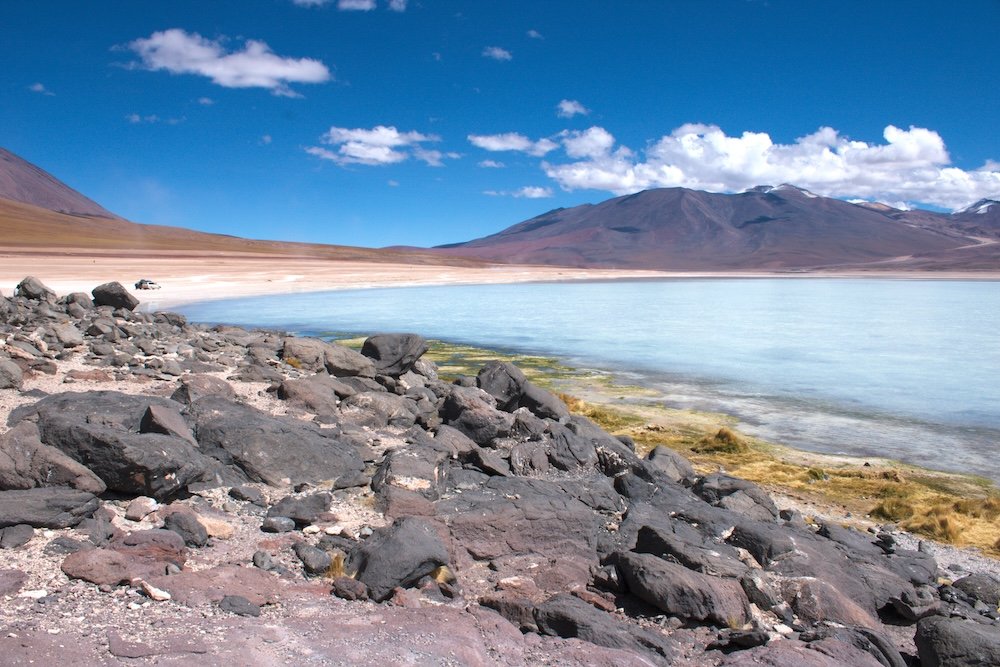
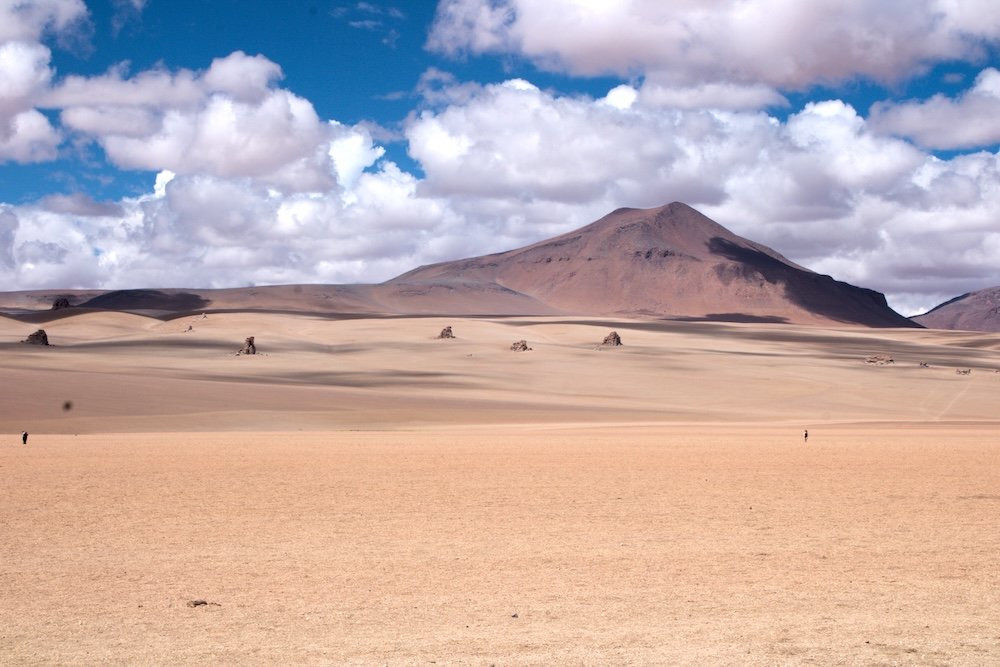
Now we finally got to start making the fun stops. The first was Laguna Blanca (White Lagoon) which was beautiful and one of my favorite stops for the day. Next we went to Laguna Verde (Green Lagoon), which wasn’t actually green. Apparently it gets its name because the afternoon sun affects the color. Since we were here in the morning, we didn’t see the color. Desierto Dali (The Salvador Dali Desert) felt like there was nothing here, but I still loved it. I find there’s something really cool about places where it just looks like nothing is there.
Next we arrived at a hot springs. It was optional if you wanted to go in, but I figured what the heck. I’m in Bolivia, doing this tour, and I’m probably never going to do this again, so why not spend the extra 30 bolivianos. However, no one actually checked our tickets (though there was a desk where they could check). Half of our group chose to soak in the hot springs and in my opinion, I could have stayed longer. The water was at the perfect temperature and the scenery around us was pretty great too.
While our bathing suits dried, we ate lunch. This is when we first realized the extent of our communication issues. As I’ve mentioned, we made it all work, but this was definitely a “get to know your fellow travelers” meal. The food was decent, but not the best meals I’ve had on a trip. I couldn’t help but compare it to the Lost City Trek where each meal was prepared for us by a chef and we got so much food.
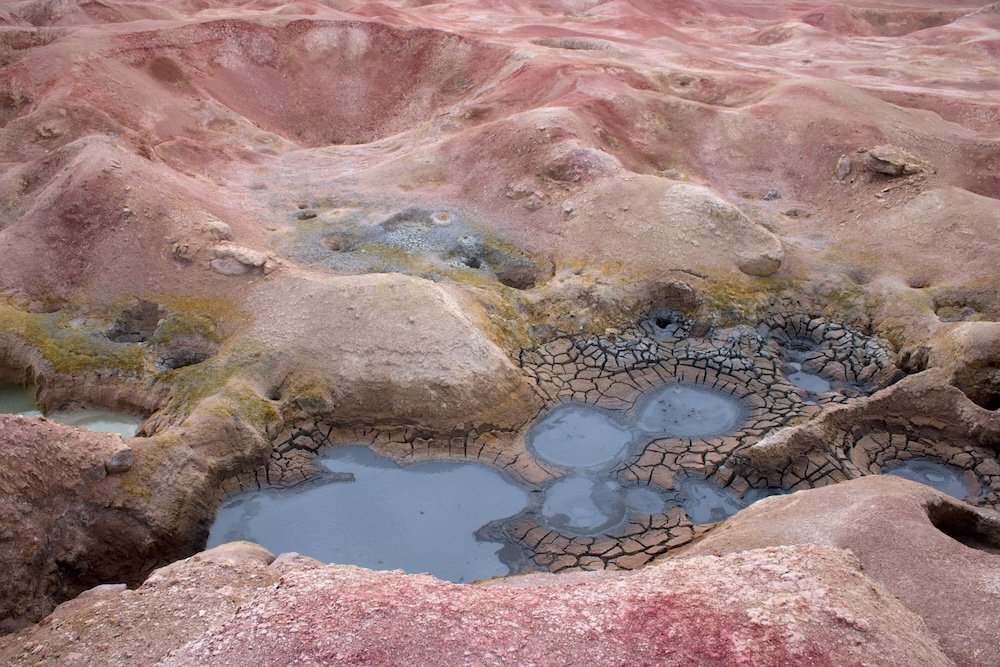
After lunch, we visited geysers. Like Tatio, they didn’t shoot up high in the sky like Yellowstone or Iceland, but I think that the landscape here was cooler than at Tatio. There were more colors in the landscape, the smell of sulphur was much stronger, and the steam was everywhere. Personally, I still think the geysers in Iceland’s Golden Circle are cooler, but this was a nice stop.
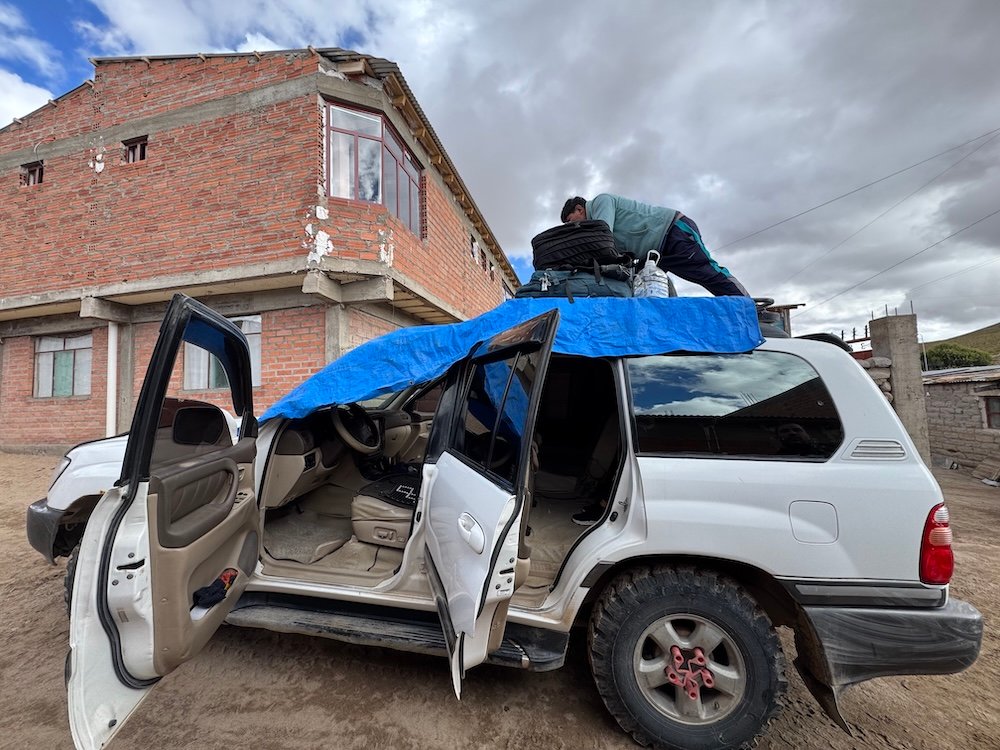
One of the things you need for a Uyuni tour is patience. The jeeps aren’t great and ours definitely had a few issues. We had to stop for a bit so our driver could do something with the vehicle. I have no idea what’s broken, but I feel confident in saying that a 15-20 minute stop on a random stretch of “road” was not in the plan. That said, we did better than the group we got stuck behind later in the day who had to replace a tire.
Now is a good time to mention that one you cross into Bolivia, it’s a lot of off roading. Sure, there’s tracks from the cars before you, but so much of it seems like a “choose your own adventure” game for the driver. So many of the stops had loads of jeeps visiting, but when we were actually driving, it seemed like we were the only ones there (though we did pass other groups occasionally).
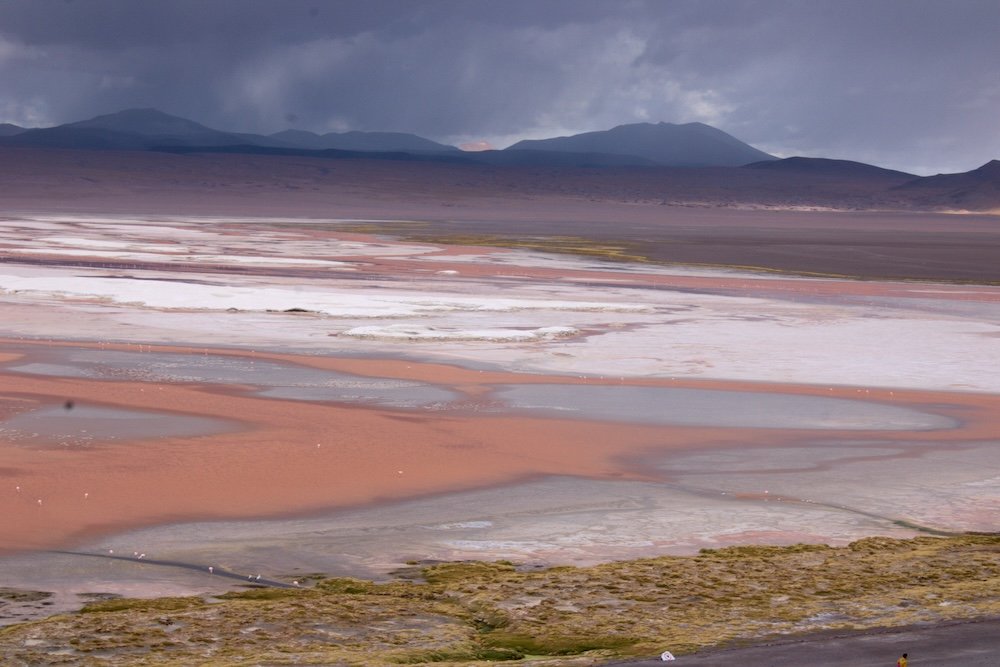
Our last major stop of the day was Laguna Colorada and I think I can say that this was my favorite stop of the day. It was freezing here and there was the faintest mist, but the scenery was great. The lagoon had several colors, but more importantly, there was a large flamingo colony. We had to walk a bit to get here, but I didn’t care (though my lungs could tell that we were at a high elevation). The views were great and I saw wild flamingos!
After one more long, bumpy drive, we finally arrived at our hotel (and a bathroom!). Our accommodation for the night was very basic. There was no heat, though there were plenty of blankets on the bed. Thankfully, we also had hot water for a shower. Dinner was at 8:00 pm (nearly one hour after we arrived) and we were exhausted. We got through dinner, but shortly after that we were all getting ready for bed. It had been a long day, and there was a time change where we lost an hour. So it was a pretty early night for all of us.
Day 2 – Rocks, Lagoons, Llamas, and Cactus
After many early mornings in a row (how did I ever voluntarily start work at 6:00 am every morning?), we got a chance to sleep in. Breakfast was at the hotel and wasn’t until 8:00 am. Sleeping in was great and breakfast was also good. By 9:00, we loaded up and headed out for another day of exploring southwestern Bolivia.
The morning was all about rocks. When we looked at the itinerary the night before, all of us were a bit skeptical because there’s only so many rock formations that you can look at before you get bored. Well, it turned out to be a pretty great morning.
First up was World Cup Rock, named because it looks like the soccer/football World Cup. Then was Llama Rock, because it looked like a llama. Both of these were just ok in my opinion, but the surrounding scenery was enough to bump it up into the ok. The next two stops were fantastic though. Along the way, we’d pass Laguna Vinta, but we didn’t actually stop for photos.
We went to La Ciudad de Piedra (Rocky City) and we had time to just walk around and take pictures. This was the stop where everything in my group changed and we got a little obsessed with taking pictures (a trend that would continue at every stop). The scenery was great, but climbing up on the rocks gave some great photos too.
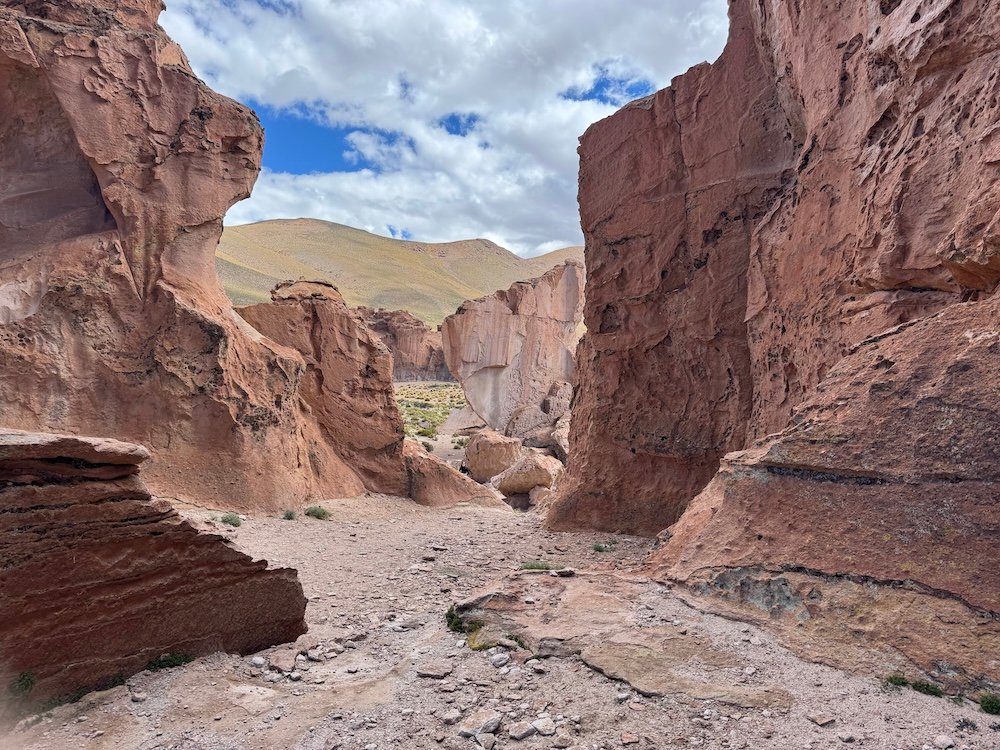
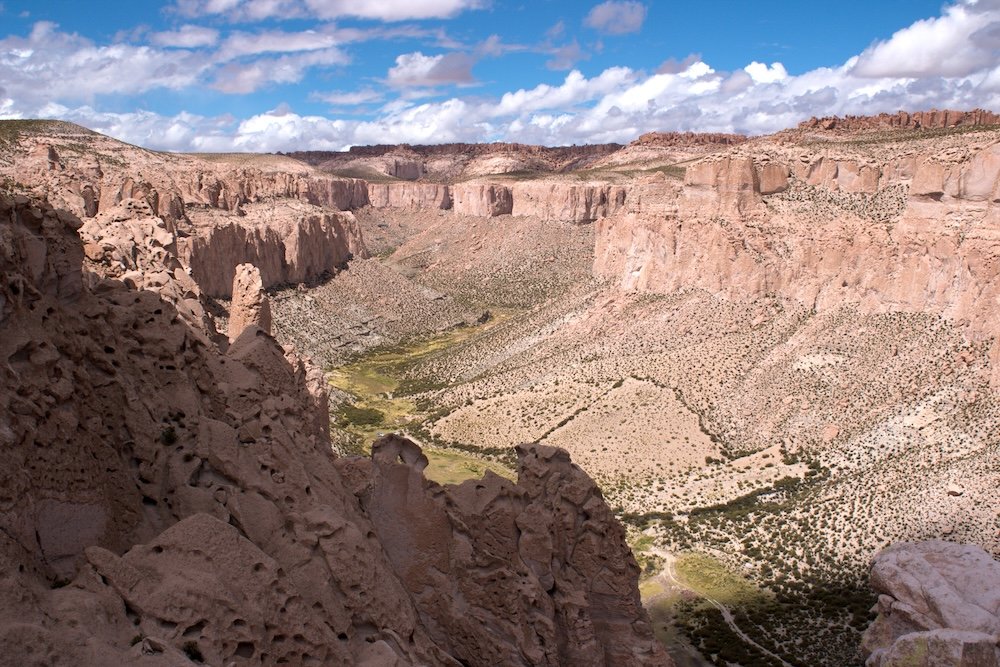
Next was Gran Cañon de Anaconda (Grand Canyon). While it’s definitely smaller than the Grand Canyon in the United States, it still has some incredible views. We got lucky and there was only one other group here when we arrived. They finished up and we got our chance to take our photos before three jeeps unloaded at once. We were all thankful we got to experience the canyon in a calmer environment.
Lunch was my favorite meal of the trip. The best I could describe it is some kind of lasagna/casserole made out of potato, meat, and egg. It was delicious and probably the best meal I ate on this tour. We had just a little time to walk around the tiny town before we had to hit the road again.
We did have to stop for another car repair before we reached our actual next stop. I’m not what was wrong, but I’m convinced that our driver saw a bunch of llamas and thought “let’s distract the tourists with llamas while we make some tweaks to the car”. It worked and we were distracted for at least a little bit.
We passed by an abandoned town (all the people who lived here moved to the town we just ate lunch at) and eventually reached another tiny town. I’m hesitant to even all it a town, because it was basically four or five buildings. All had tables and music playing and had plenty of drinks to sell tourists. We were here for about an hour and a half. While I’m all for supporting the local economies, as someone who doesn’t drink, this was a very long stop. If you do drink, the highlight is to try to the local beer made out of honey.
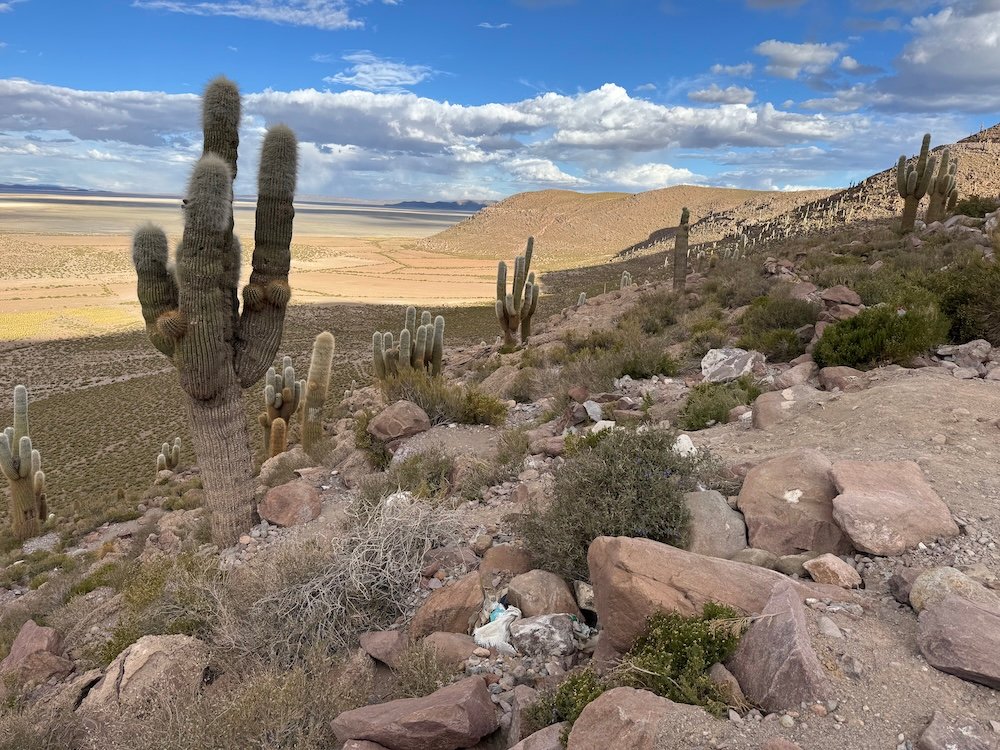
The last stop of the day was to take some photos of giant cacti. I was reminded of two places: Saguaro National Park in Arizona and my tour to Cachi in Argentina. On my tour to Cachi, there were two Polish women who were obsessed with the cacti and asked our guide three separate times when we’d be stopping for the cacti. The girl from Poland on my Uyuni Tour found this hilarious.
Our hotel for the night was about an hour from the Salt Flats. Since we planned to be there at sunrise, we wanted to get as close as possible tonight. The good news is that our hotel was a bit nicer than last night. Unfortunately there was some mix up with the room situation (I blame one of the other groups because apparently two single beds was not good enough for the couple). So instead of sharing with just one other person like I did the night before, it was me, the Polish girl, and the older German couple all in one room (yes, there were four individual beds). Oh well.
Day 3 – Uyuni Salt Flats
Day 3 was early. Very early, but so, so worth it. Our alarms went off at 4:00 am because we had to leave the hotel at 4:30. We actually left at about 4:45 due to some communication issues the night before, but we still got to the Uyuni Salt Flats by 6:00 am.
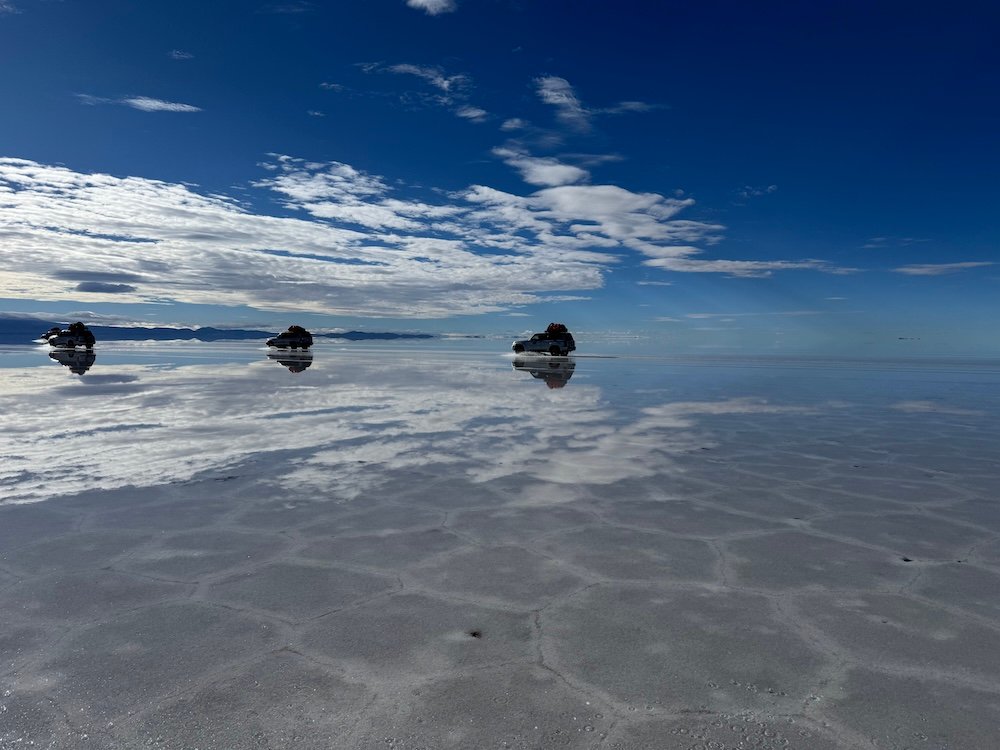
First though, we had to stop for a pair of rental boots. You could wear your own shoes on the Uyuni Salt Flats, but there’s a small layer of water and standing in salt water for over three hours was going to destroy our shoes. We gladly paid the 30 BOB for the rental rubber boots.
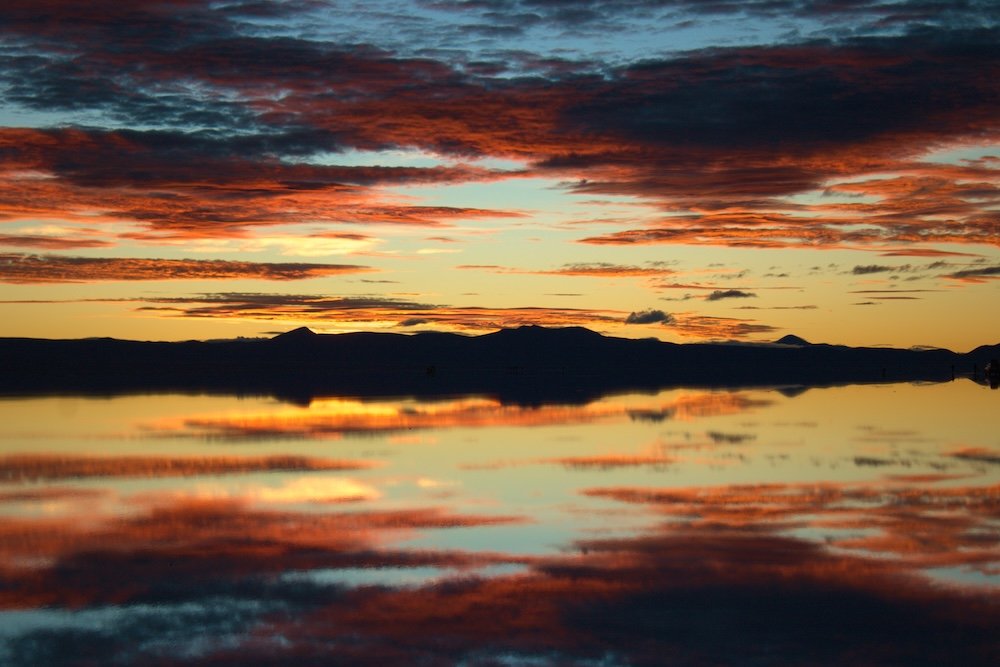
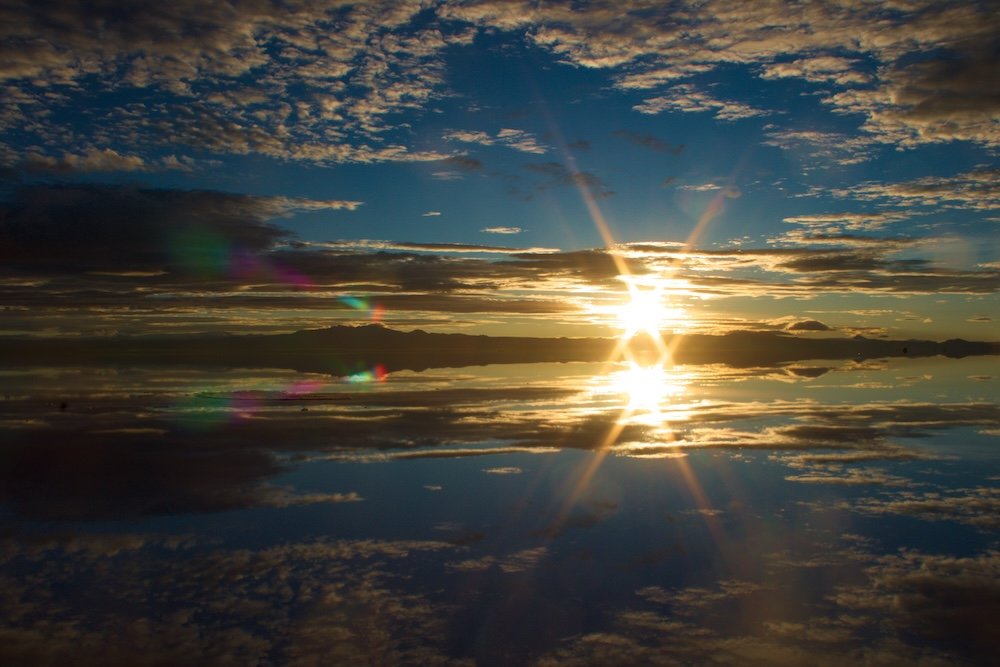
The sun was just starting to rise when we arrived on the Uyuni Salt Flats. Like with all of our stops, we took so many pictures. Photos of ourselves, the sunrise, our reflections on the crystal clear surface. Nearly two hours later, we finally ate breakfast on the Uyuni Salt Flats. It was pretty basic, but the view was incredible. Then it was right back to taking photos. Our guides had us do some ridiculous poses, but it led to some cool photos.
I think we spent nearly five hours on the Uyuni Salt Flats. You’d think that five hours of just taking photos and enjoying the view would get boring, but it wasn’t. After two long days to get here, the Uyuni Salt Flats were incredible and we wanted to soak up every moment before we finally had to move on.
We stopped at the Train Cemetery, but in my opinion, this wasn’t a great stop. Basically, this is a place filled with rusty, old trains. People typically visit just to take photos, but the problem was there were so many people that it just flat out wasn’t an enjoyable experience. I think no matter what, it would have been a let down after the salt flats, but with the amount of people who were here, it was difficult to enjoy.
We had one more meal as a group before we finally said our goodbyes. Two people were heading back to San Pedro de Atacama, one was heading straight to La Paz, and three of us were spending the night in Uyuni. I stayed in Uyuni, so after the goodbyes, I walked the few blocks to my hotel where I reveled in having my own room AND bathroom.
It was a fantastic trip, but I was absolutely exhausted by the end.
Alternatives to the Uyuni Salt Flats Tour
A tour from San Pedro de Atacama to Uyuni is not the only way to visit the Uyuni Salt Flats, though it is a very popular way to do so. Here’s a few alternatives.
Uyuni to San Pedro de Atacama – If you’re already in Uyuni and are heading south, do the reverse of my trip. Starting in Uyuni, you’ll visit the salt flats first before working your way through the rest of the scenery and to the Chilean border.
San Pedro de Atacama Return – This is nearly identical to the tour I did, but it’s four days instead of three days. Rather than stopping in Uyuni after lunch on day 3, you’ll start the drive back toward Chile (going as far as Villamar on day 3). Then on day 4, you’ll cross back into Chile and return to San Pedro de Atacama.
Uyuni Return – If you don’t want to go into Chile at all, you can do a three day tour from Uyuni. This is the cheapest option because you won’t have to deal with the more expensive Chile at all. That said, look at your travel plans. If you’re planning to head to Chile anyway, doing a return trip to Uyuni doesn’t make a lot of sense.
Tips for Your Uyuni Salt Flats Tour
Hopefully by now you have a good idea of what to expect on a tour to the Uyuni Salt Flats. But, here’s a few more tips for your trip.
Get Cash Before You Arrive
You’ll have to pay for various entrance fees in cash when you are in Bolivia. While on the surface, this seems fine, you should know that there’s no ATMs until you get to the town of Uyuni. This means that you’ll need Bolivianos before you arrive in Bolivia (if you’re coming from San Pedro de Atacama). Luckily, there are plenty of exchange offices in San Pedro de Atacama, so visit one before you leave.
I was recommended to bring 300 to 350 bolivianos for the three day trip. I only used about 200, but I would still recommend bringing 300 to 350. Due to seasonality, I believe we skipped a place or two (which saved on entrance fees). In addition, I didn’t need to use the bathroom often which also saved money (expect to pay 5 bolivianos for the bathroom). I also brought some bottled water from Chile, so I didn’t have to buy any water along the way.
Be Punctual
You’ll be picked up from your accommodation in San Pedro de Atacama early. You’ll know the time of pick up the day before, so there’s no excuse for not being ready on time. Be respectful to the rest of your group (and the driver) and be ready when you are supposed to be, whether that’s the first day when you’re being picked up or the last day when you’re getting ready to head to the Salt Flats.
Pack Your Patience
From other group members who aren’t punctual to lines at the border to breakdowns along the way, it’s important to go with the flow and be patient. You’ll get to where you need to go and you’ll be able to see all of the highlights of this incredible area, but patience is key. The drives are long, bumpy, and slow and the jeeps aren’t the best. Patience and a good attitude goes a long way.
Pack Layers
Temperatures vary wildly throughout the day. Mornings can be freezing (particularly when you’re waiting at the Chile-Bolivia border) but afternoons can be quite pleasant. Make sure you have packed enough clothes to stay warm, but dress in a way that you can remove layers throughout the day.
Bathrooms are Often Paid
Bathrooms aren’t readily available everywhere and often come with a small fee. In my experience, it was typically 5 bolivianos to use the toilet (but they at least gave you toilet paper with your fee). Because of the cost of bathrooms and the uncertainty of when the next bathroom would be, many people (myself included) didn’t drink as much water as we should have. You’ll be high in elevation and hydration is important, but it’s a very bumpy ride.
Final Thoughts
The tour from San Pedro de Atacama to Uyuni offers two great benefits. First, you get your transportation between Chile and Bolivia taken care of. Second, you see some incredible scenery. While it’s easy to just think about the Uyuni Salt Flats, it’s important to note that this region of Bolivia is full of incredible scenery and while the Uyuni Salt Flats are the best, there’s still so much more to see.
Continue Your Adventure
Bolivia: In the capital city of La Paz, there’s no shortage of day trips including hiking at Chacaltaya Mountain, Charquini Lagoon, and Moon Valley. For adrenaline, bike down Death Road. Near Sucre, you can hike at the Maragua Crater. Halfway between Uyuni and Sucre is Potosí, which was once one of the richest cities in the world. In the very north, along Lake Titicaca, you’ll find the beautiful Isla del Sol. Learn even more in my Bolivia Travel Guide.
Chile: I started my trip after visiting San Pedro de Atacama. There are so many cool day trips from here including Tatio Geysers, Rainbow Valley, and even cycling Devil’s Throat. Learn more in my Chile Travel Guide.
