
Bolivia has no shortage of things to do including the Uyuni Salt Flats, Death Road, and the cities of La Paz, Sucre, and Potosi. But as you travel Bolivia, you’ll be sure to notice some quirks about the country. That’s where this blog post aims to help. Rather than letting you struggle through things on your own, here’s the Bolivia travel tips that I wish I had before visiting Bolivia.
Bolivia Travel Tips for First Time Travelers
Many travel tips are the same no matter which country you are visiting. This guide will focus on the things that surprised me during my trip to Bolivia. These are all things that I wish I would have known before visiting.
Use TicketsBolivia for the Schedule
One of the most frustrating things about traveling in South America is trying to find bus schedules. Thankfully, there’s a handy website in Bolivia that aggregates schedules for many bus companies. Not only that, but you can also buy your tickets directly from the site itself.
TicketsBolivia doesn’t have every bus listed, but they have a lot of options for the most popular routes. I always referred to this website as I planned out my route across Bolivia.
While you can purchase your tickets online, I found it to be slightly cheaper to buy my tickets in person. Whether you want the convenience of purchasing your tickets online or just want to see the schedules, TicketsBolivia is a fantastic resource.
Be Prepared for A Lot of Yelling in the Bus Stations
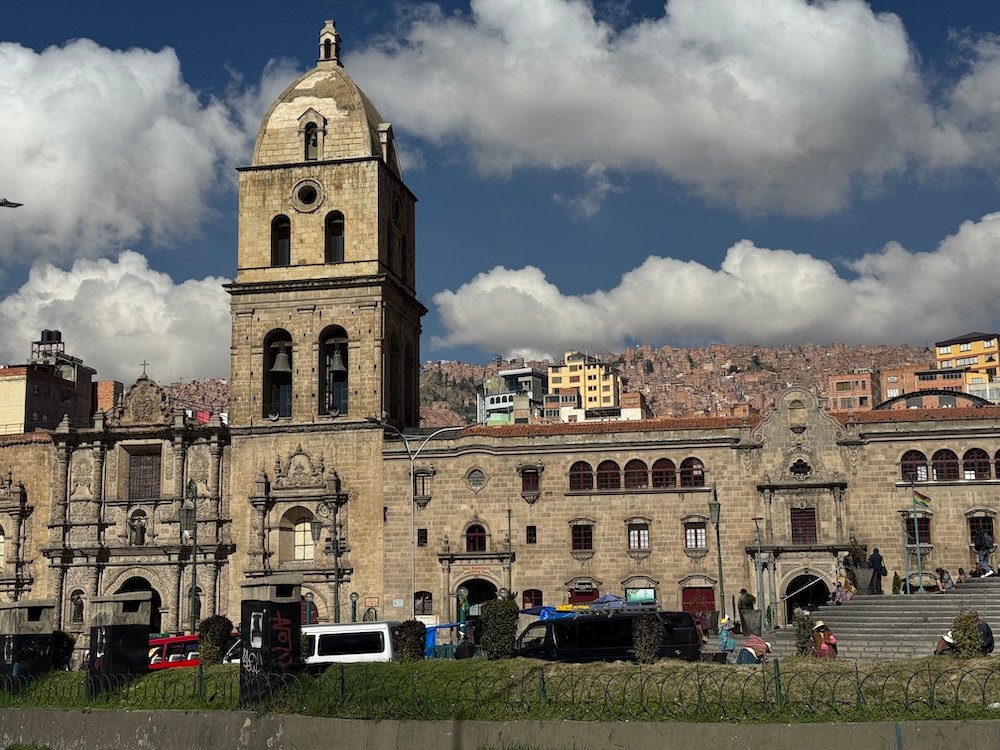
I don’t mind sitting and waiting in bus stations, but in Bolivia, I tried to keep this to a minimum. Every bus station is filled with yelling. Not from the other passengers, but from the staff for the different bus companies. They’ll call out the names of their bus’s destination as they try to sell tickets.
I’m not sure who thought that this was a great system, but it’s how things work in Bolivia. Try not to arrive at the bus stations too early or you’ll lose your mind with the constant shouts of “La Paz! La Paz! La Paz!”.
Don’t Forget to Pay Your Terminal Fee
You can buy your bus ticket online or in the bus station itself, but this ticket never includes the terminal fee. In Bolivia, most bus stations charge a separate fee for using the terminal. The good news is that this fee is very small, typically less than two Bolivianos, but it’s still there.
Where you pay your fee depends on the station. In Uyuni, a woman came on our bus to collect the fees as we left the station. In Potosi, no one was at the terminal fee desk so I didn’t pay. In Sucre, there was a desk inside the station and you had to present the terminal fee receipt to be allowed to the boarding area. In La Paz, I used a “bus station” that was just a random stretch of road within the city, so there was no terminal at all.
The fees are minimal, but don’t be surprised if you have to pay more to leave the bus station.
You Often Have to Pay for Bathrooms
Whether you’re at bus stations, a public toilet in town, and even some restaurants in rural areas, you should be prepared to pay for the bathroom. Usually, it’s a pretty nominal fee, but it is there.
The most expensive toilets were public toilets on the Uyuni Salt Flats tour. These people know they have the only toilet and charge accordingly.
Don’t Drink the Tap Water
Like with many places in South America, Bolivia is another place where you shouldn’t drink the tap water. While some countries have exceptions in the larger cities, even in places like La Paz, you should avoid drinking the water.
That means you should either stick to bottled water or bring a water purifier. I traveled with a Steri Pen for my five months in South America. Was it annoying always having to treat my water? Absolutely. But by the end of my five months, the Steri Pen had paid for itself with the amount of money I saved by not buying plastic bottles.
There Are Two Exchange Rates
Many people online talk about the money situation in Argentina, but I didn’t find the same discussions about the exchange rate in Bolivia. Bolivia is like Argentina in that you have to be aware of the money situation.
When I visited Bolivia, there were two exchange rates. There was the official rate that was at about 6.9 Bolivianos per $1 USD and there was the unofficial rate that was closer to 9 Bolivianos per $1 USD. That means the difference in $100 USD could be as much as 210 Bolivianos. That’s a decent amount of money.
The good news is that it’s pretty easy to manage the exchange rate. If you pay with your card or get money out of an ATM, you’ll pay the official exchange rate. If you exchange money (preferably US dollars or Euros), you’ll get the unofficial rate.
My advice is to bring enough foreign currency (US dollars or Euros) and exchange them for a better rate.
Not Every Hotel Will Accept Cards
I used my card to pay for one hostel when I was in Bolivia. I was running low on cash and just accepted the extra fee. Thankfully that was an option because most places I stayed did not accept credit cards. Every other hotel I stayed in wanted cash.
The good news is that many hotels will accept either bolivianos or US dollars as payment, but you’ll still want to make sure that you have enough cash to cover your hotel bill.

Bolivians Like Spice in Their Food
I don’t often talk about food on this blog, but I want to give a heads up for Bolivian food. They love their spice and want their food to be as spicy as possible. That’s great for them, but I am a white girl from the Midwest United States and my spice tolerance is low.
Be aware when ordering your meals that things may be a bit spicier than you intend. And if the locals warn you that a dish is spicy, it will be very spicy.
Even Locals Get Confused by City Buses
As you walk around the larger cities like La Paz, Sucre, and Potosi, you’ll see plenty of city buses. At a first glance, you’ll likely think that they are an easy way to get to where you need to go. The good news is that these buses are cheap. The bad news is that figuring out where the buses are going is not straightforward.
I spoke to one guide in La Paz who assured me that even locals get confused on the city buses throughout the country. It’s actually pretty common to see locals talking to the bus driver. It’s not a friendly catch up, but rather the locals are asking where exactly this bus is headed.
So, you can use these local buses while in Bolivia, but be prepared to ask for help. If you speak Spanish, that’s ideal. If you don’t, talk to your hotel and make sure you really understand where you need to go for the bus.
Don’t Rely on Uber
I’ve come to prefer Uber while I travel. I love that I can get the price up front and I don’t have to worry about a language barrier. I planned to use Uber for the few journeys I needed in Bolivia, but that plan didn’t quite work.
I visited in spring of 2026 and even big cities like Potosi and Sucre didn’t have Uber available. In La Paz, the app showed drivers, but was never able to connect me with a driver.
Therefore, be prepared to rely on taxis in Bolivia. Your accommodation should be able give you approximate prices or even call a taxi for you.
Bolivians Prefer Markets to Grocery Stores
As someone who prefers to pick up snacks and breakfast foods at a grocery store, this was a bit frustrating. That’s not to say that grocery stores don’t exist, but compared to many other countries within South America, grocery stores are few and far between.
My advice is to find grocery stores for your shelf stable foods, but if you’re looking for any fruits and vegetables, head to the local market. You’ll find so many more options (and they’ll likely be better too).
You Will Feel Out of Breath
I traveled Bolivia from south to north. I started in San Pedro de Atacama, Chile and took a tour through the Uyuni Salt Flats before continuing northward. I didn’t notice much of the elevation in Uyuni, but once I got to Potosi, it hit me so hard.
So many of the popular sites in Bolivia are at high elevations and you should just accept that you’re going to feel out of breath. Even after three weeks in Bolivia, I still huffed and puffed as I hiked up hills on Isla del Sol.
Final Thoughts
With these Bolivia travel tips, you can plan to have a more successful trip. You’re sure to still find some things that you wish you had known earlier, but these tips are a fantastic starting point for planning your trip.
Continue Your Adventure
La Paz: In the capital city of La Paz, there’s no shortage of day trips including hiking at Chacaltaya Mountain, Charquini Lagoon, and Moon Valley. For adrenaline, bike down Death Road.
Bolivia: Near Sucre, you can hike at the Maragua Crater. Halfway between Uyuni and Sucre is Potosí, which was once one of the richest cities in the world. In the very north, visit Copacabana and Isla del Sol on Lake Titicaca. And lastly, no trip to Bolivia would be complete without visiting the Uyuni Salt Flats. Learn even more in my Bolivia Travel Guide.
