
Bolivia is landlocked and can often be overlooked thanks to its more popular neighbors, but Bolivia does have a lot to offer. There’s mountains and rain forests and lakes and so much more.
I spent three weeks in Bolivia as part of a much longer trip through South America. Despite three weeks in the country, I’ve just barely scratched the surface of what Bolivia has to offer.
Let’s start planning your trip to Bolivia!
What to Do | Know Before You Go | Transportation | Budgeting |
Solo Female Travel & Safety
The Best of Bolivia
La Paz | Uyuni | Sucre | Copacabana | Potosí
La Paz
Bolivia has two capitals and La Paz is one. For those taking international flights, you’re likely to start or end your journey here. You can spend a day in the highest capital city in the world, but consider staying longer. There are so many great day trips from La Paz.


Uyuni
Nearly every visitor to Bolivia ends up in Uyuni at some point and that’s for a good reason. The Uyuni Salt Flats are absolutely stunning. Whether you day trip from Uyuni or take one of the longer 3 day tours through southern Bolivia, you’re sure to have some incredible views.

Sucre
Bolivia’s other capital is Sucre and it’s a favorite among travelers. From the architecture to the day trips and everything in between, Sucre can be a great place to base yourself for a few days.


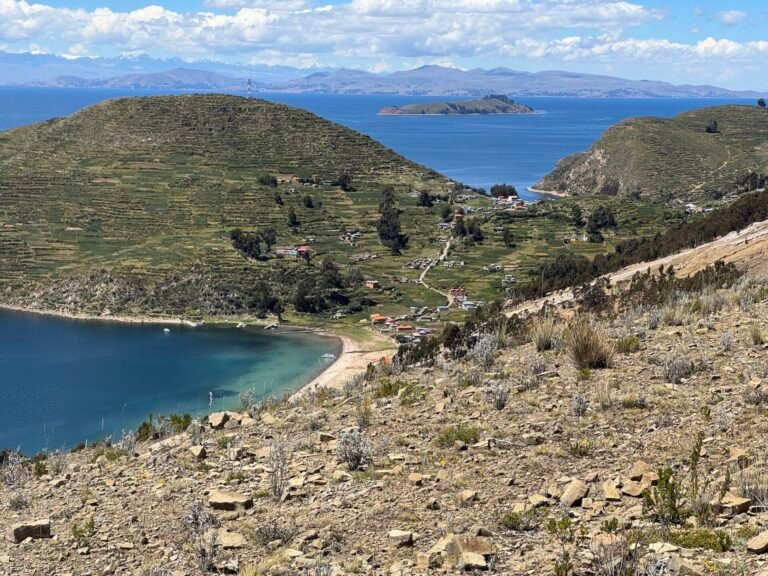
Copacabana & Isla del Sol
I was told by several tourists to skip Copacabana. I’ll admit that the city isn’t my favorite, but it’s perfect for exploring the nearby Isla del Sol in Lake Titicaca. That alone makes it worth adding in a stop in Copacabana.
Potosí
Potosí was once one of the richest cities in the world, though you wouldn’t know it if you visited today. Silver was extracted from the nearby mountain and minted into coins to ship back to Spain. Now it’s no longer as rich, but it can still be worthwhile to spend a night.

Know Before You Go
Currency – Boliviano (BOB). At the time of writing, it’s best to pay with cash. Get the best rate by bringing dollars or Euros to exchange in Bolivia.
Language – Spanish. Learn some basic Spanish before you visit Bolivia. While you will likely be able to find English at your hotel (but it’s not a guarantee), it’s best to have at least a basic understanding of Spanish. Do not expect to hear a lot of English.
Power – 110 V and 60 Hz (same as the United States).
Tipping – Your service charge is typically include in the cost of your meal, so tipping is generally not expected. However, if you had a fabulous experience, a small tip is appreciated.
Water – In most of Bolivia, the tap water is not safe to drink. Either stick to bottled water or bring your a filter/purifier. I used a Steri-Pen for my trip to Bolivia and treated all of my water and didn’t get sick once.
Transportation
In general it will take longer than you might expect to travel within Bolivia. Distances are short, but the mountains add a lot of extra time to any journey.
By Plane – For the longer journeys, you can consider flying, but I think the bus is easier. There are flights connecting a lot of the major cities, but it’s not like flight networks you might find in other South American countries. Many tourists just choose to take the long buses instead.
By Rental Car – While you could rent a car in Bolivia, I’d suggest thinking twice. Bolivian drivers are in a whole other league and it’s just going to be easier to use the buses.
By Bus – You will likely be able to get bus to wherever you need to go. Bolivia’s bus network is massive, with all sorts of companies crisscrossing the country. I used TicketsBolivia to research all of my bus routes. While you can buy tickets online, it’s generally cheaper to buy the tickets in person with cash.
Budgeting
In general, I found Bolivia to be a very affordable place to travel. Out of all of the places I visited during my five months in South America, Bolivia was where I spent the least amount of money, but I never felt like I was missing out.
Accommodations – I stayed in private rooms during my time in Bolivia and with the exception of one hotel in Potosí, I had private bathrooms. I averaged about $20 USD per night.
Food – Food prices, like everywhere in the world, will vary wildly. You can find street food for cheap or sit down to a nice meal. In general though, I didn’t have too difficult of a time finding a reasonably (or even cheaply) priced meal for anywhere from $5 to $10 USD.
Transportation – Transportation costs vary wildly based on which mode of transport you choose, when you book your ticket, and which cities you are traveling between. Most of my bus tickets were $5 to $10 for a four hour journey. However, my overnight bus from La Paz to Sucre cost more than my most expensive hotel. At least the bus was nice.
Activities – The price for activities varies greatly depending on what you want to do. For day trips, I typically paid around $40 USD, but the price varied based on what I was actually doing. Big activities like Death Road in La Paz can cost as much as $100 USD for the day. A 3 day tour of the Uyuni Salt Flats cost me about $200 (not including entrance fees).
The biggest thing to note about your budget for Bolivia is that it’s best to exchange money when you are in Bolivia. The Boliviano (BOB) is unstable at the moment and while the official exchange rate was 6.9 BOB per 1 USD, I was often able to get anywhere from 8.5 to 10 BOB per 1 USD if I exchanged cash. That will greatly help your budget.
Solo Female Travel & Safety
I’ve spent just over three weeks in Bolivia as a solo female traveler. In general, I had no issues and felt completely safe. However, it should be noted that I don’t go out after dark and I don’t drink alcohol. My biggest worry was some of the buses, particularly my night bus from Sucre to La Paz. But with proper research, you can find reputable bus companies and you should be fine.