
I’ve now visited Colombia twice. My first trip was short, coming it at just nine days, but my second trip was nearly six weeks covering so many of the highlights of this beautiful country. So with that knowledge, I put together this Colombia travel budget which outlines everything I spent on my trip. My hope is that you can use this information to plan your own budget for your trip to Colombia.
About My Trip
I’ve now been to Colombia twice for a total of nearly two months. On my first trip, it was nine days in Bogota, Villa de Leyva, and San Gil. My second trip had me spending nearly six weeks in Colombia and covering a lot of the country. I started in Cartagena and traveled along the Caribbean coast before heading to Medellin and the coffee region. I briefly stopped in the Tatacoa Desert before finishing my trip in Bogota.
About My Travel Style
My six weeks in Colombia was part of a longer five month trip through South America, so budget was a concern. That said, I still paid for private rooms in every place I visited (aside from the Lost City Trek). I’m just past the days of hostel dorm rooms and need my own space.
I always tried to find accommodation that included breakfast since that covered one of my meals for the day. All but two of my hotels included a free breakfast.
For activities, I paid for a few, but indulged in many free activities to help balance my budget.
And lastly, I have to mention that I don’t drink alcohol or coffee. That’s a personal preference, but it also makes a huge impact on my travel budgets because I don’t have to account for those things.
A Note about Currency
Colombia uses the Colombian Peso (COP) as their currency. When you pay with cash, or even if you charge it to your credit card, this is the currency you will use. That said, I’m an American and so this post will use US dollars (USD).

How Much Did I Spend in Colombia?
Note that I’ve rounded each value to the dollar, just to make things a bit more digestible. So if you look at the average cost per day and think it doesn’t quite line up, that’s why.
I’m also giving two columns for averages. The first column gives an average of my entire time in Colombia. The second column excludes the Lost City Trek. This is a fixed price and includes accommodation, food, and guides for 4 days and 3 nights. It’s a great experience but I think it can definitely skew the averages for non-hikers.
Lastly, we’ll be focusing on my most recent trip to Colombia. I’ll give some advice about other destinations I’ve been my other trip to Colombia, but this cost is from my most recent trip in early 2026.
| Total Spent | Average Per Day (40 Nights) | Average Per Day (37 Nights) ** Excludes Lost City Trek | |
| Hotel | $1,329 | $34 | $36 |
| Intercity Transportation | $280 | $7 | $8 |
| Intracity Transportation (Metro, City Buses, etc.) | $45 | $1 | $1 |
| Food | $616 | $15 | $16 |
| Activities | $809 | $21 | $11 |
| Miscellaneous | $12 | $1 | $1 |
| Total | $3,118 | $75 | $66 |
Colombia Travel Budget Breakdown
Sure, numbers are fine, but lets breakdown each of those categories further to give a little more detail. I’ll also give some ideas for ways you can adjust the budget, either to save money or to travel more luxuriously.
Hotels
For this section, we have to exclude the Lost City Trek since my accommodation (jungle dorms) was included in the price of the tour. So, excluding that, I spent $1329 on 14 hotels over 37 nights. That averages to about $36 per night. But not hotels are created equally and some were more expensive than others. So let’s break it down a bit further.
Under $25 per night: Neiva (1 night), Minca (3 nights), and Villavieja (2 nights)
$25 to $35 per night: Santa Marta (3 nights), Medellin (2 hotels, 4 nights total), Palomino (3 nights), Salento (5 nights)
$35 to $45 per night: Guatape (3 nights), Jardin (5 nights)
Over $45 per night: Cartagena (2 nights), Tayrona National Park (3 nights), Bogota (3 nights)
My cheapest hotel was in Neiva ($19 per night), while my most expensive was in Bogota ($53 per night). As I traveled on a budget, my goal became finding safe, comfortable, and affordable accommodations. I also tried to make it a priority to have breakfast included at my hotel, since that would save on food costs later in the day. Only two of my hotels (Minca and Guatape) didn’t include breakfast.
It is also worth noting that I booked my hotels several weeks in advance. On my first trip to Colombia, I ran into an issue and my Bogota hotel was canceled on me the day before my arrival. This led to me scrambling to find something comparable (both in price and amenities) and I wasn’t able to.
I ended up for a room with a shared bathroom and no breakfast for the same price as a private bathroom and included breakfast. Since that experience, I try to make it a point to book early to make sure I have numerous options available. The best hotels are usually the first to get booked.
Lastly, for reference, on my first trip to Colombia I visited Bogota, Villa de Leyva, and San Gil. The hotel in Bogota was a comparable price, but both Villa de Leyva and San Gil had hotels on the cheaper end of things. In 2024, both of my hotels in Villa de Leyva and San Gil were under $25 per night.
Adjustments to the Budget
You can absolutely go cheaper than what I did, especially if you’re willing to use hostel dorm beds. Still, I was comfortable with each of my accommodations, but I could have absolutely spent more for nicer accommodations.
My advice here is that if you plan to stay in more private rooms, you should look to book earlier. I learned from experience that if you need to book a budget hotel room last minute, it can be hard to do. Obviously this may be different based on days (my stay was for a weekend where there was a big concert in Plaza de Bolivar in Bogotá), but I had significantly more options when I booked a few months in advance.
Intercity Transportation
I needed to get from city to city and that meant a lot of buses in Colombia. In total I spent $280 moving from place to place, but let’s look how that breaks down.
Buses: $165 (19 rides)
Taxis/Ubers: $54 (10 rides)
Flights: $62 (1 flight)
Let’s start with the flight because it’s the easiest. Flights can be huge time savers in Colombia, but can be more expensive.
Notice that I say “can be more expensive”.
In my case, I had planned to take a night bus from Santa Marta to Medellin. On a whim, I checked flights and saw that the flight (including baggage) was the same price as the overnight bus. A one hour flight or a 16+ hour bus? I chose the flight. Yes that did mean I had a few extra expenses because I had to spend one night in a hotel, but I consider it to be money well spent.
For taxis and Ubers, I occasionally needed to rely on these to get to and from the bus station (or airport). On average I spent $5 per ride, which is not a terrible deal at all. In general, I relied on Ubers rather than taxis since I could see exactly what price I had to pay before I requested the ride.
Then we have buses. I spent $165 on my 19 buses, which comes out to about $9 per bus ride, but that’s not really the full story. The cost of the bus varies drastically on the bus. Is it a local bus? How long is the bus? These all factor in to the price. So while it is a $9 average, my cheapest bus was Salento to Armenia for $2 and my most expensive bus was Cartagena to Santa Marta for $24.
Considering the amount of moving I did during my six weeks in Colombia, I think $280 is pretty reasonable.
Adjustments to the Budget
If you’re traveling via public transportation (which I recommend you do), there’s not a lot you can do to change this budget. However, you can ask around at the different bus stations.
Bus schedules aren’t posted, nor are ticket prices. I was able to gather enough information from the internet to figure out a rough schedule and which company would take me where I needed to go. But there are several companies doing these routes so if you’re on a budget, don’t be afraid to ask at multiple ticket desks. You may find a bus that’s cheaper.
Intracity Transportation (Metro, City Buses, etc.)
In general, I didn’t take a lot of public transportation for my day to day activities. Instead, I just walked everywhere. This is great on the budget (though not always great on the feet). Still, I spent a bit of money of my daily transportation and my grand total was $45, or about $1. Now, $1 doesn’t feel very representative of what I actually spent since most days, I spent nothing. So here’s how that $45 actually breaks down.
Medellin Public Transportation: $14 (Civic card and 9 rides)
Ubers in Medellin: $6.50 (two rides for an average of $3.25 each)
Guatape Tuktuks: $7.50 (two rides)
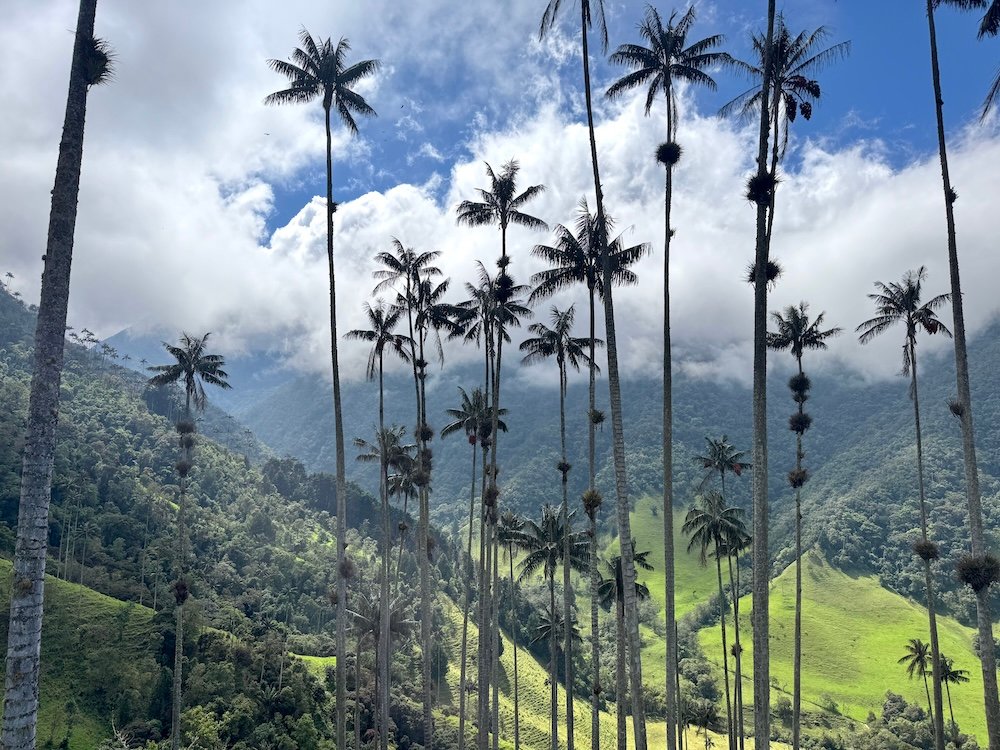
Salento Willys: $16 (two round trips to the Cocora Valley, a shared private Willy to Filandia, and a traditional Willy from Filandia)
In general, you can get a long way with just your two feet. Medellin, Guatape, and Salento were the only places I relied on public transportation and that’s only because it got to be too far to walk.
Adjustments to the Budget
I don’t think you anyone needs to make a lot of adjustments to this section of the Colombia travel budget. This number is so small that whether you account for it or not, it doesn’t have a big impact.
The only exception is if you plan to take more taxis. I’m content to walk to as many places as possible and my budget reflects this (though there are clearly some places you can’t walk). If you plan to use taxis and Ubers on a more frequent basis, budget higher.
Food
I spent $616 on food and most of that was in restaurants. Of course I still visited grocery stores to pick up a few snacks here and there (and the occasional breakfast when my hotel didn’t include it), but I wasn’t visiting grocery stores for actual meals.
So that $15 per day is typically one meal in a restaurant per day and one snack, whether that be a grocery store, ice cream, or a juice. Keep in mind, with the exception of two hotels (a total of six mornings), I had a free breakfast at my hotel and that does a great job of helping to balance the budget.
Note that one thing this number does not include is bottled water. Since I knew I would be traveling in South America for nearly five months, I invested in a Steri-Pen. It’s not cheap, but it meant that I could fill up my reusable water bottle from any sink, treat it with my Steri-Pen, and have safe water to drink.
On my first trip to Colombia, I purchased bottled water for my nine days in the country. With the Steri-Pen I could eliminate it (though I did purchase one bottle of water while hiking the Lost City Trek).
Adjustments to the Budget
If you’re a foodie traveler, you could absolutely increase this budget and treat yourself. On the other hand, I splurged on a handful of meals and could have kept my budget down by eating more local food if I wanted to. For the average traveler, I think my budget is a good place to start. You’ll eat on a budget, but occasionally be able to treat yourself.
Activities
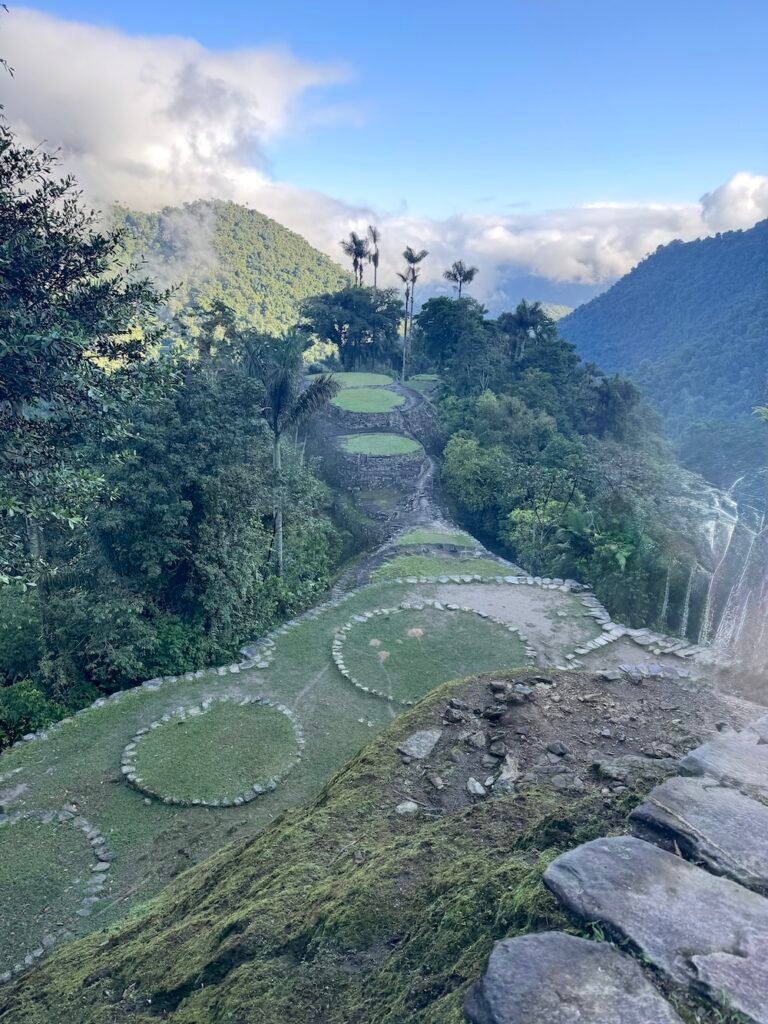
First and foremost, let’s talk about the Lost City Trek as that was most expensive thing that I did in Colombia and it has the biggest impact on my budget. I spent about $520 on the Lost City Trek, not including tips and the few drinks I purchased along the way (if we include that, the number jumps to $560).
Is the Lost City Trek expensive? By Colombian activity standards, yes. But keep in mind that your fee includes all of your accommodation (very basic jungle dorm beds), food (three filling meals per day plus snacks), guide, translator, and transportation to and from Santa Marta.
I traveled for six weeks, so there wasn’t as big of an impact on my overall Colombia travel budget, but it’s still there and it’s still expensive.
If we exclude the expensive Lost City Trek, I averaged just $11 per day on activities. There were some days where everything I did was free and other days where my activities were expensive.
Here’s a breakdown of what I spent that activity money on.
Cartagena: $10 at Castillo San Felipe
Tayrona National Park: $32 (includes entrance fee, insurance, and the use of the shuttle)
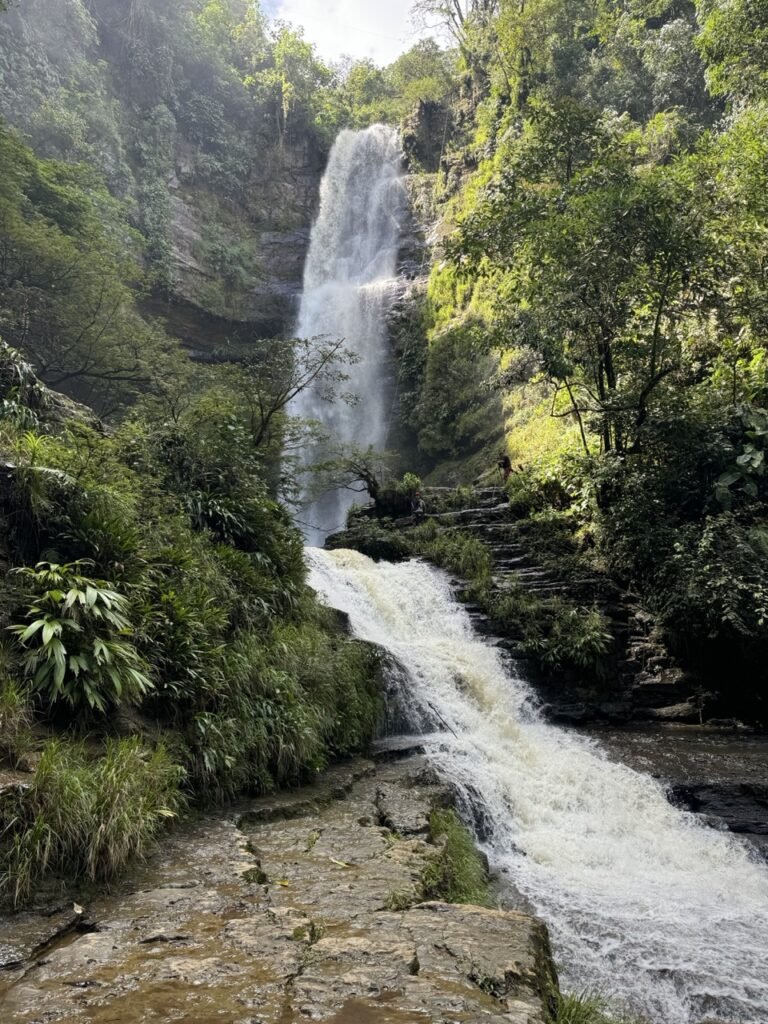
Minca: $39 for four separate waterfall entrances, a chocolate workshop, and birdwatching tour
Guatape: $10 to visit La Piedra del Peñol
Jardin: $22 for a Cueva del Esplendor Tour
Medellin: $42 for three walking tours in the city
Salento: $24 ($16 for the main hike at the Cocora Valley and $8 to revisit Bosque de Palmas on a second day)
Filandia: $3 to climb the Mirador Colina Iluminada
Tatacoa Desert: $41 for a private tuktuk tour to the desert
Bogota: $41 for a tour at Paloquemao Market
On my first trip to Colombia, I visited some different locations. For your planning purposes, here’s what that activity breakdown looked like. Keep in mind these prices were in November 2024.
Guatavita and Zipaquirá Day Trip from Bogota: $81
Monseratte Funicular in Bogota: $7
Museo de Oro in Bogota: $1
Juan Curi Waterfalls in San Gil: $2
Adjustments to the Budget
Activities are completely subjective and it’s going to vary from person to person. You can skip some of the activities I did or add on more activities yourself. For the average person, I think the activities that I have listed here are a very good starting point for a Colombia travel budget.
Miscellaneous
My miscellaneous category is small and the there’s three major things that I put in here. First was laundry. I paid to have my laundry done twice (once after the Lost City Trek when everything was disgusting) and once again in Salento where I found a really good deal on laundry service. It cost about $4 each time I sent my laundry out.
Next, I paid for the bathroom in Tayrona National Park. I wasn’t happy about it, but you just have to do it sometimes. In many bus stations throughout the country, you’ll also have to pay to use the bathroom.
Lastly, there’s a 10,000 COP charge in Neiva. There was an issue with my bag where the driver unloaded it at the wrong stop. Luckily they sent it on the next bus, but I still had to pay for the drivers mistake.
The bottom line is that you’ll always have a few expenses that don’t fit in anywhere else, but it’s not enough to throw off your entire travel budget.
A Reminder About Inflation
I’ve visited Colombia twice. The first time was in November 2024 and then I returned in early 2026 and spent six weeks exploring the country. Prices changed a bit during that time, though it wasn’t significant. Still, it’s important to add a bit more to what I spent just to make sure you’ve accounted for inflation and general price increases.
Final Thoughts
Colombia is a very affordable country and I’ll admit I got used to the prices (I had massive sticker shock when I arrived in Uruguay). The good news is that because it’s so affordable, Colombia is a great place to travel longer since your money can stretch just a bit further
Continue Your Adventure
Colombia’s Cities: Consider visiting to Cartagena, along Colombia’s coast, Bogota, Colombia’s capital, or Medellin, a troubled city with a fascinating history.
Colombia: Start planning your trip with my Colombia Travel Guide which includes a realistic travel budget, my top travel tips, safety information, a nine day itinerary, my six week itinerary and so much more.
More Travel Budgets: For more about travel budgeting, check out my detailed travel budgets for Chile and Scandinavia. You can also read more of my budgets in Uruguay, Bolivia, Ecuador, and Peru.
