
Cuenca, Ecuador is one of the most beautiful cities that I’ve visited in South America. The historic center is gorgeous and is sure to be the highlight of your trip to Cuenca. It was the highlight of mine and I loved walking through the streets and looking at all of the churches, colorful colonial buildings, and markets.
So given that, I looped together my favorite places to make this DIY walking tour of Cuenca.
DIY Walking Tour of Cuenca
This mini walking tour has a heavy focus on churches and cathedrals. There’s just a lot of them here in this tiny area of Cuenca, but all of them are beautiful. So, I designed this route to go from Mercado 10 de Agosto to Mercado 9 de Octubre, stopping at the various churches and parks along the way.
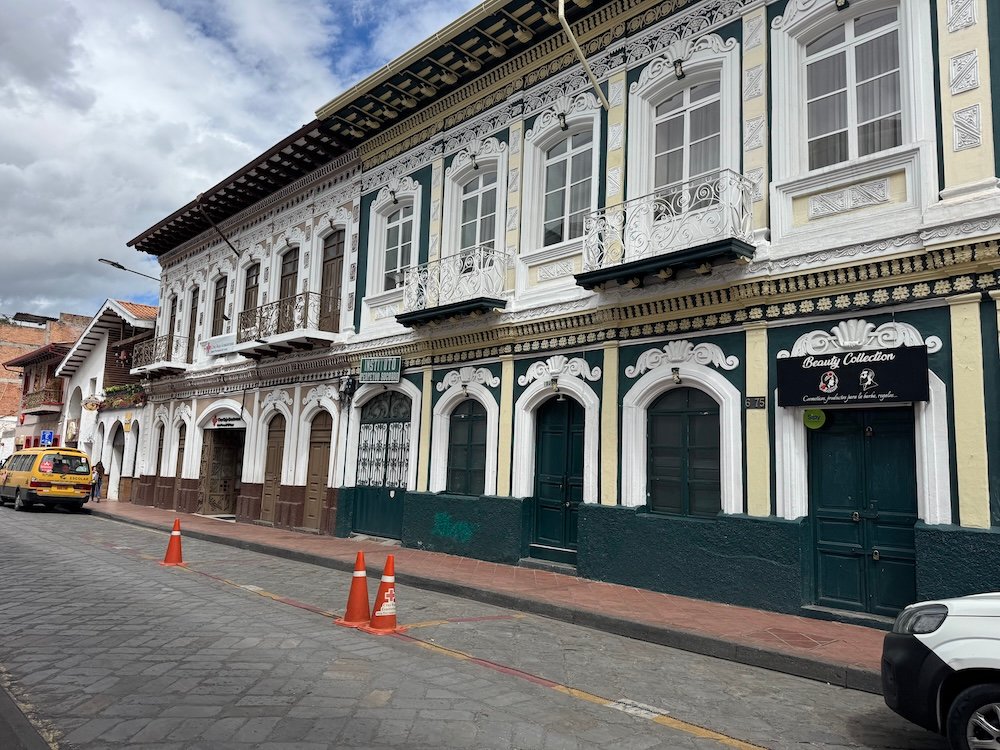
But these aren’t the only things to look for. The streets in this part of Cuenca are lined with gorgeous buildings. Cuenca is a colonial town and you can see it reflected in the architecture.
Mercado 10 de Agosto
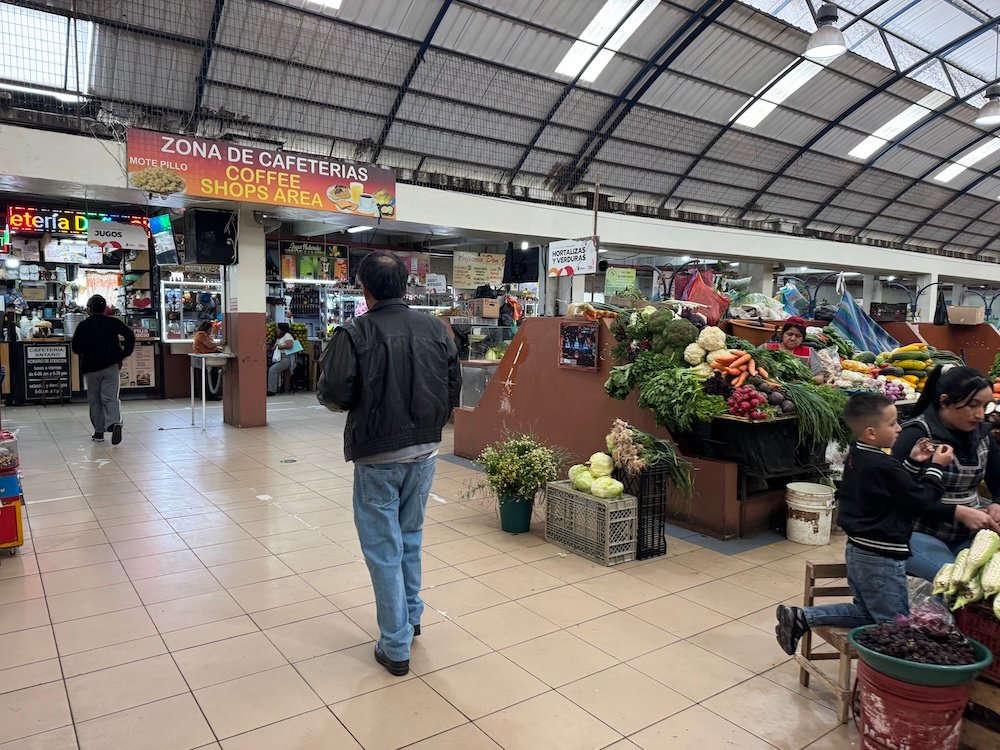
Start at Mercado 10 de Agosto. Like so many other places in South America, these markets are where so many locals do their shopping. Here you’ll find the standard market options of fruits, vegetables, meats, and eggs. On the top level, you’ll find restaurants serving full meals as well as some stalls that just sell juice.
But in my opinion, what makes this market unique is the Healing Limpias. While they are only at the market two days per week (Tuesdays and Fridays), it’s quite an interesting sight. The Limpias are women who set up under the escalators and use herbal plants to cleanse the soul of bad energy. If you’re not prepared for it, it can seem a bit strange walking through the market and seeing women whipping people with local plants. But it has its traditions and many believe in the ritual.
And lastly, what’s the significance of 10 de Agosto? Because on August 10th, 1809, Ecuador officially declared its independence from Spain, making it Ecuador’s Independence Day.
Plaza de San Francisco
Head slightly north, along Calle General Torres, and you’ll reach Plaza de San Francisco. Outside most churches in Cuenca, you’ll find a small (or large) square with benches and some people watching. I’ll admit that Plaza de San Francisco isn’t the most lively of the squares that I visited, but it’s right on the way.
Plus, you’re right next to the San Francisco Church, which promotes itself as the English speaking Catholic Church in Cuenca. Every Sunday at 10:00 am, they offer masses in English plus they also preform other sacraments for the faithful. If the doors are open, pop in for a quick visit.
Iglesia Católica Santísimo Rosario
Continue up Calle General Torres until you reach Calle Gran Colombia. Turn right and you’ll arrive at Iglesia Católica Santísimo Rosario. While not my favorite church of the day, I’d still recommend checking it out if you’re able.
I didn’t quite make it inside the church on my visit to Cuenca as it was closed. Still from the outside, it’s a nice church to walk past.
Catedral de la Inmacula Concepcion (New Cathedral)
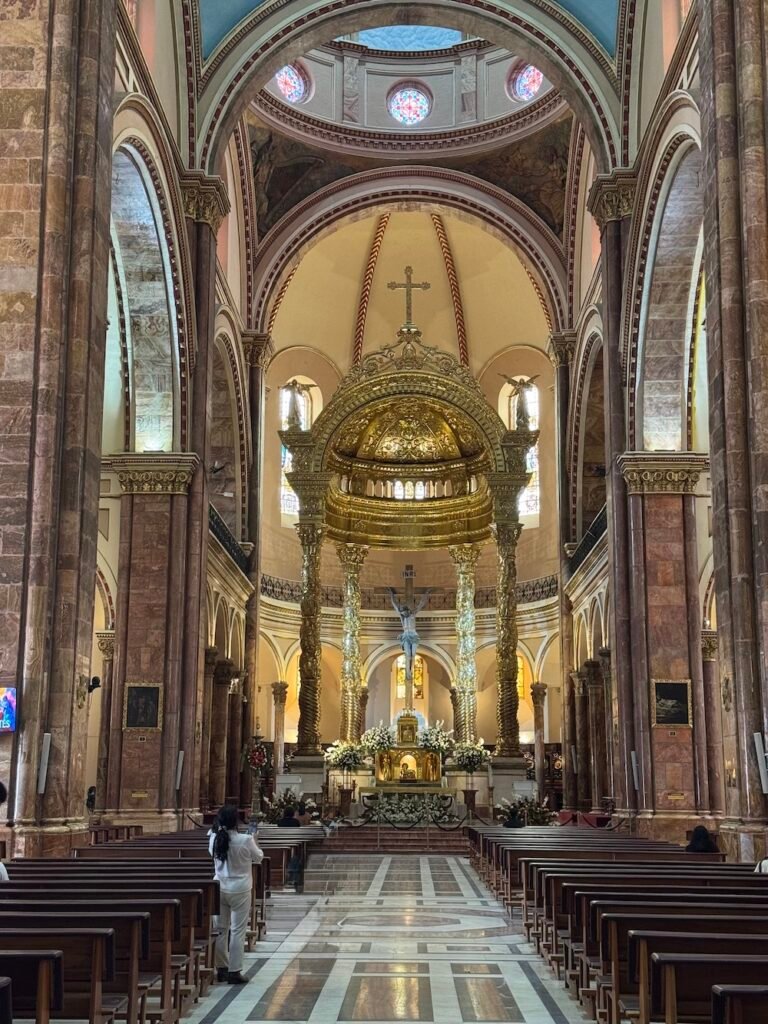
At the corner of Calle Gran Colombia and Calle Benigno Malo, turn right. Then walk two blocks until you reach Calle Mariscal Sucre. Turn left and you’ll arrive at Catedral de la Inmacula Concepcion. This is Cuenca’s new cathedral and it’s my favorite of the churches in the city. Step inside and marvel at the cathedral.
After nearly a century of work, Cuenca’s new cathedral was finally finished in 1975. Despite it being a more recent construction, it wasn’t without its issues. The cathedral’s towers are actually shorter than originally designed. That’s because it was later determined that the cathedral wouldn’t be able to hold the weight of the towers if they were constructed to their full height.
Inside, you’ll find a beautifully decorated interior and some gorgeous stained glass. It’s one of my favorite cathedral interiors in South America.
So why did they decided to build a new cathedral even though the Cuenca’s Old Cathedral is still standing? Bureaucracy, mostly. Cuenca’s Old Cathedral was operating both as a parish church and as a cathedral and in the late 1800s, it was decided that they needed to separate, so a new cathedral was formed.
Parque Calderon
Continuing down Calle Mariscal Sucre, you’ll reach Parque Calderon. This was my favorite park to sit in. It’s right in front of the cathedral, there’s great buildings surrounding it, and it’s the best square for people watching.
However, I will say that I was approached the most in this square. People wanted to try to sell me things or wanted a donation. It wasn’t anywhere as bad as Cusco, Peru but sometimes you just want to be left alone.
Iglesia del Sagrario (Old Cathedral)
Cuenca’s Old Cathedral isn’t too far away. Just another block down Calle Mariscal Sucre, you’ll find Iglesia del Sagrario. As mentioned earlier, this used to function both as a parish church and the cathedral of Cuenca. However, it’s no longer consecrated, now that Cuenca has its new cathedral.
Cuenca’s Old Cathedral has been around for centuries with the initial construction starting 1567. It would take over two centuries before it was finally finished in 1791.
This is another church that I didn’t quite make it into due to timing, but if it’s open on your visit, pop inside for a look at Cuenca’s original cathedral.
Iglesia de San Afonso
Turn left up Calle Presidente Borrero and follow it one block to Iglesia de San Afonso. I walked passed this church several times while in Cuenca but the hours did not align with my sightseeing schedule. At the time I visited, the church’s hours were early in the morning (6:00 am to 9:00 am) and late in the evenings (7:00 pm to 8:00 pm). From the outside it’s gorgeous and since it’s right on the way, I think it’s worth mentioning.
Mercado 9 de Octubre
We’re making our way to the final stop. Continue heading north along Calle Presidente Borrero unit you reach Calle Hermano Miguel. Walk one block and turn left. You should see the entrance for Mercado 9 de Octubre.
Like Mercado 10 de Agosto, this is another market where you’ll find locals doing their shopping. In my opinion, Mercado 10 de Agosto is a bit more exciting, though I prefer the organization of Mercado 9 de Octubre. At this market, the meat stalls are located on the lowest level and that really helps with the smell.
And lastly, to really come full circle, let’s talk about the significance of 9 de Octubre. Well, on August 10, 1809 Ecuador declared its independence from Spain and on October 9th, 1820, Guayaquil gained its independence from Spain, making it the first Ecuadorian territory to do so.
From here, it’s travelers’ choice. This walking tour is over.
How Long Do You Need in Cuenca, Ecuador
If your goal is just to see the city of Cuenca, you only need one day in the city. However, if you want to take day trips, such as visiting the nearby Cajas National Park, you’ll obviously need more time.
How to Get to Cuenca, Ecuador
Cuenca is well connected to other cities within Ecuador.
By Plane
I arrived into Cuenca by plane. From the capital of Quito, it’s a short one hour flight to Cuenca. It’s a small airport, so there aren’t many flight options, but if you’re traveling from Quito, this can be a great option.
The airport is near the city center, which is incredibly convenient. I took an Uber from the airport to my hotel in the center (since I arrived at night) and it cost just $4. Cuenca also has a tram that connects the city center with the airport.
By Bus
Cuenca’s bus station seems to always be busy with buses connecting Cuenca with the rest of Ecuador. Buses to Guyaquil and Quito are frequent.
I left Cuenca on a bus for Baños. Despite being two popular tourist cities, direct buses between the two cities are infrequent (though their website has more buses listed, there’s just two per day run by Amazonas bus company).
Final Thoughts
Not all travelers to Ecuador make it to Cuenca and that’s a shame. The city is beautiful and one of my favorites in all of South America. While the city is beautiful, you can see it in a day, meaning it should be easy to squeeze into your Ecuador itinerary.
Continue Your Adventure
Ecuador: Spend one day in Quito, Ecuador’s capital city. From here you can visit Mitad del Mundo to visit the equator, take a day trip to Otavalo, or take a day trip to hike to Cotopaxi Base Camp. Visit Mindo and hike at the Tarabita Waterfalls. Continue hiking with the three day Quilotoa Loop trek. Baños is an adventure town, but I recommend a jungle tour. Learn even more in my Ecuador Travel Guide.
