
There’s a lot that can be said about hiking at Acadia National Park. The hikes are great, but often difficult and I’ll fully admit, I didn’t realize quite how difficult some of these hikes would be. So, I put together this list of my top Acadia hiking tips. It’s everything that I wished I had known before I went to Acadia National Park. Some may be obvious, but I think it’s a good reminder that we shouldn’t get too complacent in our trip planning.
Top Acadia National Park Hiking Tips
This is not an exhaustive list of everything you need to know about hiking at Acadia National Park, but rather, what I consider to be the top five, most important Acadia hiking tips. These are the things that I think would have made the biggest impact on my trip to Acadia National Park.
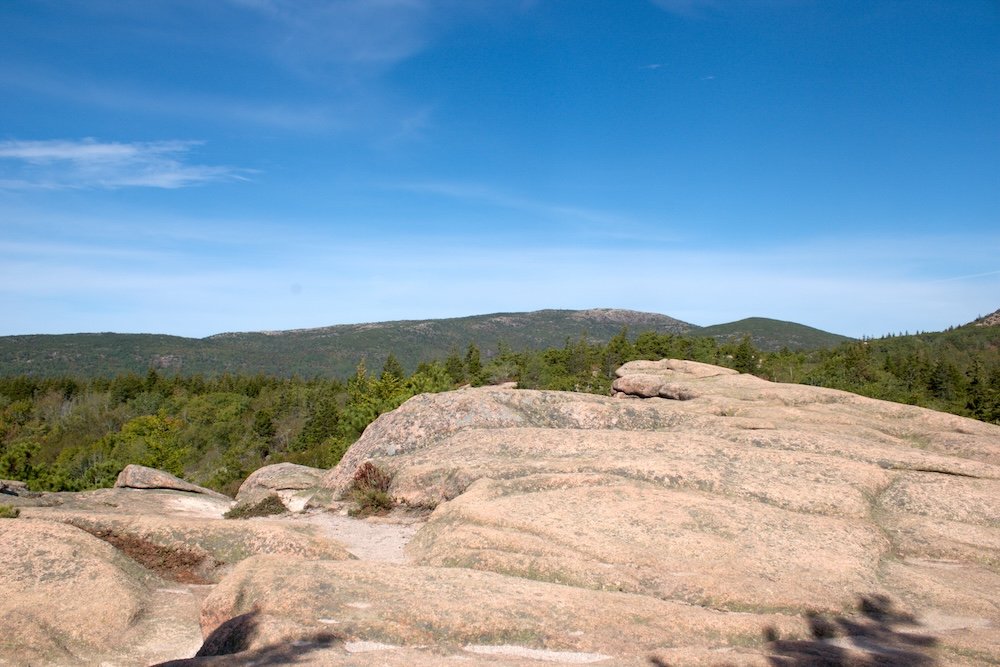
Be Prepared to Rock Scramble
I don’t mind rock scrambling, but I’ll be the first to admit that I don’t love it as much as I used to. Ever since I dislocated my knee while hiking at Rocky Mountain National Park, I get nervous at any particularly rocky section of trail. I hope that one day that feeling goes away, but it’s been three years and I still feel nervous about it.
At Acadia, there was a lot more rock scrambling than I anticipated. Most trails had some rock scrambling in some capacity. On some of the easier trails, it might just be one large boulder, but on some of the more difficult trails, it can just feel like never-ending scrambling.
The ground at Acadia is naturally rocky and uneven. So if you’re used to hiking in national parks out west, or come from the Midwest where seemingly everything is flat, these uneven trails and rock scrambling can be a bit of a shock. I expected it on the Beehive Trail. But I significantly underestimated the rock scrambling at Jordan Cliffs. Then, when I tried to focus on easy trails the next day, I still found some rock scrambling. So, the moral of the story is, there is a lot of rock scrambling at Acadia National Park, and you need to be prepared for it.
Acadia Hiking Tip #1 – If it’s a moderate trail, there will be rock scrambling.
Stretch Before and After Your Hikes
Because so many trails at Acadia National Park involve rock scrambling, you’ll likely find yourself using muscles you don’t typically use. While it’s maybe less of a big deal if you only hike one or two short trails, if you plan on doing a lot of hiking, stretch out your leg muscles before and after your hike. It’s no guarantee that it will help, but anything is better than nothing.
I stretched before and after my hikes, but after my first day at Acadia National Park, my quads were so sore. I attribute this specifically to the Jordan Cliffs (which to be fair, I had read were a quad killer), but it made hiking on my second day more difficult than it needed to be. I was stretching constantly, trying to do whatever I could to find some relief for my aching muscles, but it was too late.
Your muscles may get sore, so do what you can to take care of them.
Acadia Hiking Tip #2 – Take time to stretch. Your muscles will thank you.
Bring Some Hiking Poles
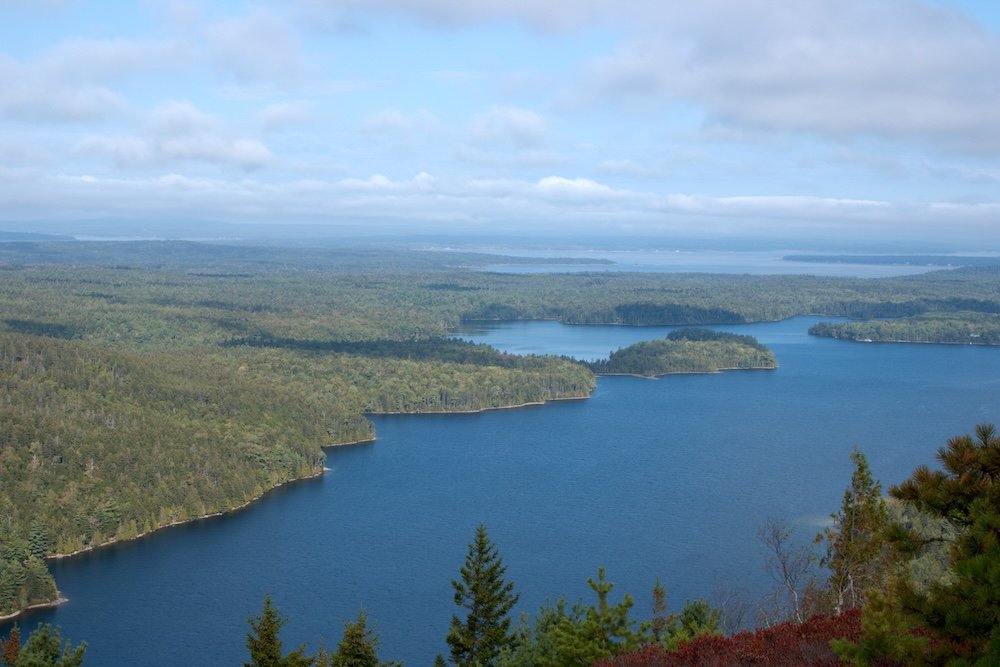
I keep coming back to the uneven ground and rocky terrain, but it affects so much at Acadia National Park. So, to help, I recommend bringing a pair of hiking poles.
I have hiking poles and have brought them on many hikes. As my knee was still healing from that incident at Rocky Mountain National Park, they just helped provide some extra stability while I was hiking (and I credit them for helping me to summit Guadalupe Peak). I stupidly decided not to bring them to Acadia National Park, thinking that I wasn’t going to be doing that strenuous of hiking, so I wouldn’t need them.
Needless to say, I regretted that decision. While there are certain areas where hiking poles would be more of a hindrance than a help (the ladders on the Beehive Trail), there are other areas where it would have been so nice to have just a little extra help. I didn’t bring them, so I had to rely on myself, but if I ever return to Acadia National Park (and I hope to one day), you can best believe I will be bringing my hiking poles.
Acadia Hiking Tip #3 – The ground is uneven and hiking poles will help give you stability.
Go Slow and Allow Enough Time
Hiking is not a race. I know it can be tempting when you see that a hike takes two hours to complete to get into the mindset that you have to do it in that time (or even faster), but give yourself plenty of time at Acadia National Park. Hiking is not a race and it’s better to give yourself more time than you need.
At the Jordan Cliffs, my hiking speed dropped significantly because the terrain was so uneven. On day two, I was moving slower because my legs were so sore from the day before. And when I hiked to Flying Mountain, I found a beautiful break spot along Valley Cove and ended up staying for 20 minutes.
Don’t plan your day so full that you have to race to get done. Let your legs take breaks as needed and don’t overexert them.
Acadia Hiking Tip #4 – It’s not a race. Take your time on these hikes.
Research, Research, Research
I think this was my biggest failure for my trip to Acadia National Park. Yes, I did research about which hikes I wanted to do. I scrapped things that felt too difficult or too much of a time crunch, but I should have researched some of these hikes further.
I recommend getting your data from multiple sources and reading what other hikers have to say. The reviews on AllTrails are fantastic for this and while I read a lot of reviews for my hikes on Day 2 (after I modified my plans to only try to tackle easier hikes to give my legs a break), I should have done more research for Day 1. Again, I’m specifically referring to the Jordan Cliffs trail. I had read that it was a “quad killer” by one blog, but it didn’t really sink in until I was on the trail and couldn’t turn around.
I think had I done more research, I would have seen that the trail was difficult and not one that I would have wanted to include in my trip. And if that were the case, my legs wouldn’t have hurt as much as they did and I likely would have had an even more positive experience at Acadia National Park.
Hindsight is always 20/20, but I wish I would have taken more time up front to really research trails and truly understand what I was getting into with some of these trails.
Acadia Hiking Tip #5 – Read about the trails before you hike them so you know what you’re getting into.
Where Should You Hike at Acadia National Park?
This is subjective, but there are some really great hikes at Acadia National Park. One of the most popular is the Beehive Trail, which is difficult but rewarding. I enjoyed it and would recommend it for anyone who’s up for a challenge (and not afraid of heights).
The Jordan Pond Area also has numerous hikes. While I wasn’t a fan of the Jordan Cliffs, I enjoyed the views along the Jordan Pond Path. The trail to the South Bubble involves some rock scrambling, but the views from the top were fantastic.
If you’re looking for less strenuous hikes, I recommend looking into my list of 7 easy hikes at Acadia National Park.

How Long Do You Need at Acadia National Park?
At a minimum, you’ll need one full day at Acadia National Park. This gives you enough time to see the main sights along Park Loop Road and get in a few short hikes.
With two days at Acadia National Park, you can go a bit further. On your first day, spend your time exploring Park Loop Road. Then on your second day, branch out into some of the lesser visited areas of the park. I recommend the Beech Cliffs, Flying Mountain, and Bass Harbor areas.
If you have more than two days, you’ll still have things to do including visiting the small islands nearby. That said, if it were up to me, I’d spend my additional time exploring elsewhere in Maine. Acadia is beautiful, but so is much of Maine.
Entrance Fees for Acadia National Park
Entrance to Acadia National Park costs $35 per vehicle and your pass will be valid for seven consecutive days. Annual passes, such as the America the Beautiful pass are also accepted.
Note that visiting Cadillac Mountain Road comes with an additional fee. To visit Cadillac Mountain Road, you’ll need to pick up a reservation which comes with a timed entry. You can stay as long as you want, but you must have a valid entrance ticket in order to be permitted to drive up the mountain. Reservations cost $6 per vehicle.
Getting Around Acadia National Park
Acadia National Park surprised me with its transit system. While many national parks through the United States force visitors to have their own form of transportation, Acadia is different. You can bring your own vehicle, but if you don’t have a vehicle, you can still get to most places in the park.
A handy shuttle service connects Bar Harbor and Acadia National Park. Then within park, additional shuttles help to move visitors around. In total, there’s 11 lines that take visitors to all of the main sights throughout Bar Harbor and Acadia National Park. And the best part? This shuttle is completely free thanks to a massive donation that LL Bean makes to Acadia National Park each year.
Where to Stay at Acadia National Park
Bar Harbor is the closest town and sits right outside Acadia National Park. This is where most visitors stay as it’s the most convenient. You’ll have about a 15 to 20 minute drive to the popular Park Loop Road. That said, prices for hotels in Bar Harbor are understandably high. Make sure to budget accordingly.
I travel on a budget so my accommodation situation looked a little different. I spent the night in Bangor, which is about an hour and a half away from Acadia National Park. I left Bangor early in the morning and spent the day exploring Acadia National Park. Then I spent one night in Bar Harbor since I had tickets for sunrise at Cadillac Mountain the next morning. After a second day of exploring Acadia National Park, I drove back to Bangor where hotels were cheaper.
When to Visit Acadia National Park
Acadia is best visited from May through October as this is when the top sights are open. During the winter months, you can still visit Acadia National Park, but some roads close and the hiking can become dangerous.
In summer, you’ll have the warmest weather, but you can also expect a decent amount of tourists. Normally as it gets later in the season, crowds thin out, but this is New England which is famous for its fall foliage. In late September and October, you can expect big crowds who come not just to see Acadia National Park, but also to see all the bright fall colors.
I visited in mid September and had really great weather. The trees had barely started to turn colors so if it’s important to you that you see the fall colors, I’d recommend early October. That said, there’s no guarantee when you’ll get peak colors as it changes slightly every year based on weather.
Final Thoughts
Hiking at Acadia National Park is rewarding, but it can also be more difficult than you might be expecting. However, I think with these Acadia hiking tips, you’ll be better prepared and will be more likely to have a successful and fantastic trip.
Continue Your Adventure
Acadia National Park: Tackle the popular Beehive Trail or simply hike around Jordan Pond. While much of Acadia National Park is rocky, here’s my favorite easy hikes. For non-hikers, check out the best stops along Park Loop Road. Loop the highlights of Acadia together in this one day itinerary or if you have more time, try my two day itinerary.
More in Maine: Visit the city of Portland where you can get out on the water on a Mail Boat Cruise. Nearby is Cape Elizabeth with its gorgeous lighthouse.
More in New England: Maine is just the beginning of adventures in New England. In Rhode Island, tour the over the top mansions in Newport. In Connecticut, visit the historic fishing village of Mystic or one of its many state parks. Take a quick detour through New York to visit Albany. And don’t miss out on Stowe, Vermont – it’s a favorite among many travelers.
US National Parks: Start planning your national park vacation with my US National Park Travel Guide. You’ll find information about each park, photos, itineraries, budget tips, advice for non-hikers, the best scenic drives, and more. Plus, don’t forget to book your timed entry reservations in advance!
