
Buenos Aires is the capital of Argentina and its largest city. It’s a popular city to visit and I’d argue that it’s most traveler’s favorite city in South America. There’s just so much to see and do in this city alone that you could spend weeks here and never see it all.
Before you plan your trip, there’s a few quirks that you should be aware of. So, here’s my top Buenos Aires travel tips for first time visitors.
Buenos Aires Travel Tips for First Time Visitors
So many of my travel tips focus on travel tips for a full country, but I think there’s a few things that are specific just to Buenos Aires. Of course, some of these tips (particularly those concerning money) can apply to the whole country, but in general, I’ll be focusing on tips for Buenos Aires, specifically.
Don’t Use the ATMs
My first tips for visiting Buenos Aires is all about dealing with money. The money situation in Argentina can be a bit complicated if you’re not prepared.
First and foremost, you’ll need cash in Buenos Aires and many other places in Argentina. While you can use your card in many places, you’ll still need cash at some point.
Normally, I just get cash from ATMs when I travel, but I do not recommend using ATMs with a foreign card when you’re in Buenos Aires. And it’s not just me. As I finished a walking tour, my guide spent 20 minutes discussing Argentina’s money crisis which included tips for dealing with cash. His top tip was that tourists avoid the ATMs.
Why? First, there are high fees that come with using foreign cards in Argentinian ATMs. Second, withdrawal limits for foreign cards are low. Those two things combined mean that getting cash from the ATMs one of the worst options for getting cash. You’ll pay a high fee and not get a lot of cash for it.
Despite having a debit card that refunds ATM fees, I still skipped ATMs during my time in Buenos Aires since there were several other options to get cash.
Get cash, but don’t use the ATMs when you’re in Buenos Aires.
Ask Your Hotel Where to Get Cash
So if you shouldn’t use ATMs when you’re in Buenos Aires, where should you get cash? There’s several options including Western Union, exchange houses, and even people on the street.
My recommendation is to talk to your hotel. Every tourist that comes to Buenos Aires needs to get cash and your hotel will know the best places to go. Since the exact rate varies from location to location, it’s best to ask advice from locals. The people at your hotel want you to have a good experience and part of that means that they don’t want you to feel ripped off when you get your cash.
When I asked at my hotel, I was direct to an exchange office a few blocks away.
Bring US Dollars
Since exchanging cash is the best option for getting cash in Buenos Aires, it’s a good idea to make sure you have enough cash to exchange. Specifically, you’ll want to bring brand new, US $100 bills. These have a blue stripe and are known as the “Blue Dollar”.
The $100 bills are what is preferred for cash exchanges throughout Argentina. Some people have had luck with $50 bills, though they have reported getting a slightly worse rate than with $100 bills. Those same reports also mention that $20 bills are the least accepted.
If Buenos Aires is your first stop, bring cash with you. If you’re coming from elsewhere in South America, you may have to exchange money into US Dollars before you come.
As a note, I came from Uruguay and the ATMs there had the option to retrieve US Dollars, so that’s how I got my currency before I arrived in Buenos Aires.
Pay by Credit Card if You’re Able
I know I just gave a few tips about using cash in Buenos Aires, but my next tip is to pay with your card when you can. Despite what you may read online, the major credit cards have finally updated their software to use the unofficial “blue dollar” rate. So while you can pay with cash nearly everywhere, it’s just so much easier to pay with your card.
Again, you won’t be able to pay with cash everywhere, but you will be able to use your card often. Use it when you can to avoid the headaches that come with cash in Argentina.
Supermarket Lines Move So Slow
I often stop at supermarkets to pick up snacks (and items for breakfast) when I’m traveling. Usually this is a quick run into the store, but in Buenos Aires (and much of Argentina), you need to be prepared for incredibly slow supermarket lines. I’m not sure what it is, but it takes way longer than you think if there’s a line at the checkout.
Bring the Right Plug
Some countries in South America use the same plug as the United States. Other countries use a plug like Europe. Some countries have outlets that allow you to use both a European plug and an American plug.
Buenos Aires (and Argentina) uses the same plug type as Europe. Don’t forget to bring an adapter if you need one.
Allow Plenty of Time if You’re Using EZE
There are two airports that serve Buenos Aires. There’s EZE (Ezeiza International Airport) and AEP (Jorge Newberry Airport) and which airport you use can have a big impact on your travel plans.
Specifically, you need to note that EZE Airport is a good hour outside of the Buenos Aires city center. Double check your flight plans and allow extra time because it takes plenty of time for the bus to get from the city center to the airport.
Save Money and Use Tienda Leon for Your Airport Transportation
You can always hire a taxi (or Uber) to get to the Buenos Aires airport, but I highly recommend using Tienda Leon. This company connects both of Buenos Aires’s airports with the city center for a very reasonable price. It’s a fraction of the cost of a taxi, so if you’re traveling solo, this is a great value.
In my experience, this company was not heavily advertised, so I want to make sure that you’re aware that this is an option.
You Can Use Your Credit Card for Public Transportation
Buenos Aires is a large city and it’s not an unreasonable assumption to make to say that you’ll be taking public transportation. I walked all over the city, but if I were to visit again, I’d save some time and energy and take one of the many buses that criss cross the city.
If you’re taking the buses, you’ll need to have a way to pay. Rather than getting any kind of travel card, you can pay with your card. Just tap it when you get on the bus and pay for your fare.
Buenos Aires is Mostly Safe, but There Are Some Areas You Shouldn’t Visit
In general, I didn’t have any issues when I traveled in Buenos Aires. I felt safe, though it should be noted that I don’t drink alcohol and rarely go out after dark. Compared to other places in South America, I think that Buenos Aires is one of the safer cities to visit.
That said, there are some places in Buenos Aires that you should avoid for your own safety. Locals will be able to give you better advice, but it’s something to be aware of.
What I can pass on is the advice I got on a San Telmo Walking Tour. As we finished up in the San Telmo neighborhood, our guide gave us some advice for where to go next. On a map, San Telmo looks close to La Boca, which is famous for the football club. It looks like you can walk between these two neighborhoods, but our guide highly suggested we took a taxi (Uber) or use the bus.
If a local tells me to avoid an area, I think that’s good advice to follow.
Buenos Aires is Not a Morning City
I will fully admit that I am a morning person and prefer to get an early start off the day. Buenos Aires does not and that was a struggle when I visited.
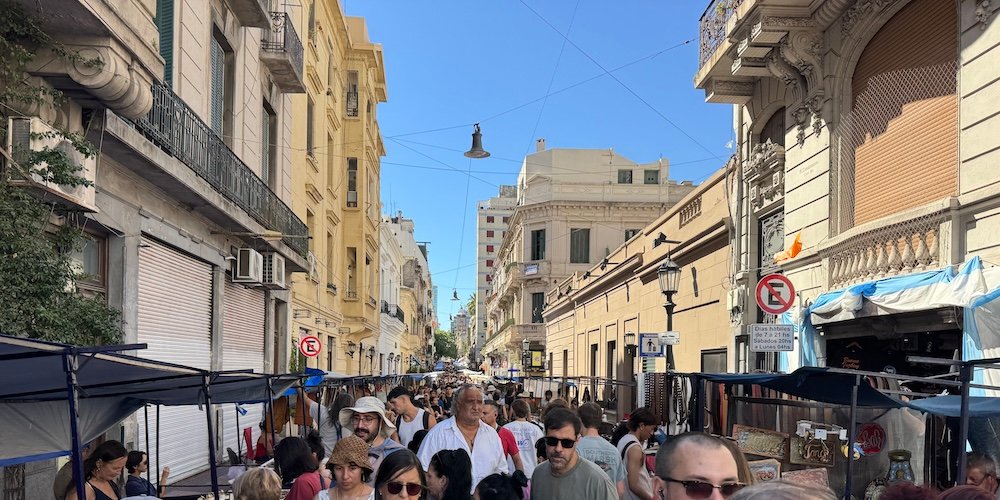
To be clear, I expect most places to start later than I would like, but I was surprised that I walked through a craft market on Saturday morning at 11:00 am and stalls were still being set up.
The good news is that if you are a night owl, Buenos Aires and you will get along great. If you’re an early bird, try to force yourself to stay in just a bit later.
Final Thoughts
Buenos Aires is a great city to visit, and while I didn’t love it as much as most travelers, I still think it’s worth visiting. There are some quirks to the city, but these Buenos Aires travel tips will help you have a more successful trip.
Continue Your Adventure
Buenos Aires: Start your adventure with this two day Buenos Aires itinerary, which includes a visit to the famous Recoleta Cemetery.
Salta: In the north of Argentina, spend a day seeing the top sights of Salta, but don’t miss out on the amazing day trips. Salinas Grandes has some of the largest salt flats, Cafayate is famous for its wineries, and Cachi has cacti and great mountain views. Loop everything together in this five day Salta itinerary.
