
Cabo Polonio is one of the more unique places I’ve visited. It’s an off grid community, meaning that all of the electricity, hot water, and amenities (not that there are many amenities) are provided by generators or brought in from the outside. It’s a bit of an adventure to get here, but in my opinion, that’s part of what makes this area unique. Cabo Polonio feels remote, even though it’s not terribly far from “civilization”.
The town is small, consisting of some hotels, hostels, and rental properties. There’s a few restaurants (though many will close during the off season making for very limited options) and two grocery stores in town. In general, there’s not a lot to do, but the beaches and sand dunes are great places to just enjoy nature. Cabo Polonio isn’t a party destination. Rather it’s a place to take a break and just relax.
I loved my time here and am so glad it got added to my Uruguay itinerary. If you’re also intrigued, here’s everything you need to know about planning a trip to Cabo Polonio, Uruguay.
How to Get to Cabo Polonio
Given what I’ve just said about Cabo Polonio, it should come as no surprise that it’s not the easiest destination to reach. Don’t get me wrong, I’ve had many more difficult connections throughout South America, but getting to and from Cabo Polonio was the most difficult that I had during my time in Uruguay.
To Puerta del Polonio
Step one of your journey to Cabo Polonio is to reach Puerta del Polonia. This is the main bus stop where all of the intercity buses will drop passengers. There’s also a parking lot here for those who are driving themselves. Even if you have your own car, you’ll have to leave it in Puerta del Polonio since only authorized vehicles are allowed into Cabo Polonio.
On the surface, it should be pretty easy to get to Puerta del Polonia since it’s just another bus stop. In some ways it is, but I found myself needing to get a little creative with the bus schedules. I was traveling from Punta del Diablo to Cabo Polonio and from Cabo Polonio to Montevideo.
When I traveled in early March, I couldn’t find any direct buses to Puerta del Polonia from Punta del Diablo. As far as Puerta del Polonia to Montevideo, I could only find one bus per day listed online. So instead, I ended up taking two buses. I traveled from Punta del Diablo to Rocha to Puerta del Polonio. Then on my return, I traveled from Puerta del Polonio to Castillos to Montevideo.
So, when planning your trip, here’s my recommendations.
- There’s a helpful website that lists out the bus schedules across all of the major bus lines in Uruguay called buses.uy. Start your search here. Note that you’ll just want to put in Cabo Polonio (not Puerta del Polonia) to the search.
- Look at your route options and verify the route options on the actual bus company website. There were a few instances where I saw a bus that I wanted to take, but when I went to actually buy tickets on the bus’ website, they didn’t exist.
- If you’re having difficulty finding direct routes between your destinations, try breaking up the journey in Rocha or Castillos. Both of these cities are close to Cabo Polonio so you’re more likely to find a local bus on a shorter route. Then, once in Rocha or Castillos, you can find a larger bus heading elsewhere in the country.
To Cabo Polonio
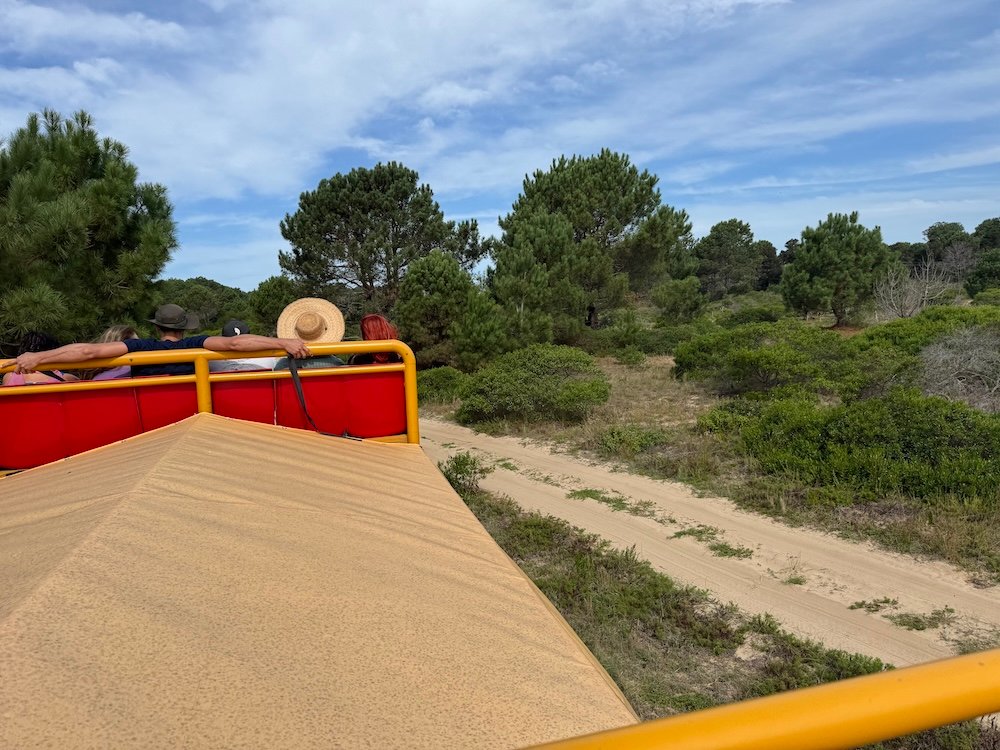
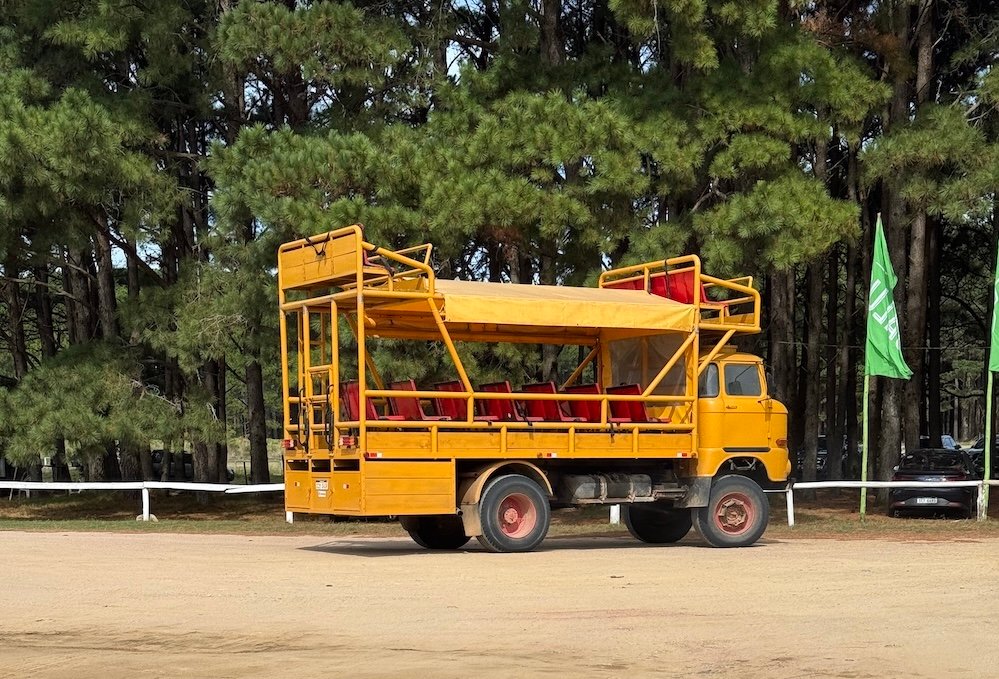
Once you arrive in Puerta del Polonia, you’ll need to get to Cabo Polonio itself. Only authorized vehicles are allowed to enter Cabo Polonio, so you’ll have to take a shuttle from the main bus station at Puerta del Polonio to the small bus stop in Cabo Polonio. This is done via a large dune buggy that traverses the sand dunes.
During the peak season, there are departures every hour, while during low season, these departures change to just a few times per day. I highly recommend looking ahead at the schedule to try to plan your day around these departures.
You can find a schedule on the Rocha tourism website, but I recommend trying to get to Puerta del Polonio no later than 3:00 pm. There’s almost certainly going to be a departure around this time (and possibly one even later in the day). How frequent these departures are depends on the season.
At the time of writing, a roundtrip journey costs 470 UYU and your ticket can be bought at the ticket desk in Puerta del Polonio. When you buy your ticket, they’ll actually give you two tickets. One is for your journey to Cabo Polonio and the other is your ticket for the journey back from Cabo Polonio. Do not lose this ticket.
For the best views, try to sit on the upper level of the dune buggy to Cabo Polonio. Though hopefully, you won’t be sat next to a French travel influencer reading what I can only assume to be the Wikipedia entry to Cabo Polonio into his video camera for the entire 25 minute ride.
What to Do in Cabo Polonio
Ok, so you’ve made it to Cabo Polonio. What do you do when you’re here?
Visit the Lighthouse
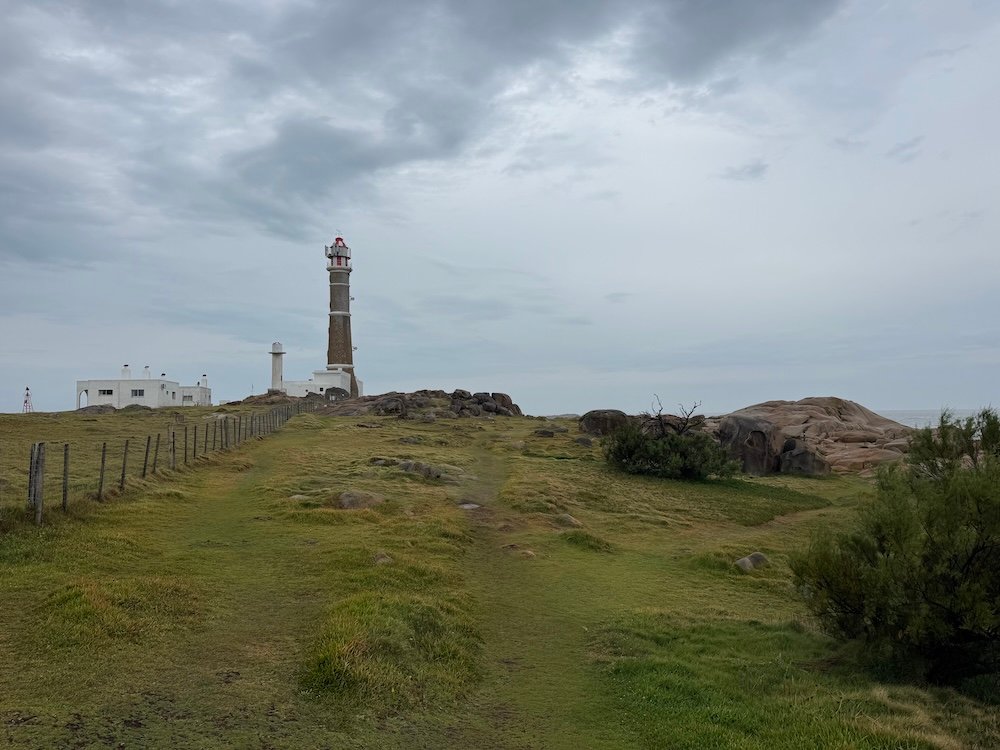
Cabo Polonio sits on the coast, so it’s no surprise that there’s a lighthouse. You can walk up and just photograph the lighthouse, but if you’re here on the right day, you can climb the lighthouse for views of the town.
Unfortunately, the lighthouse was closed when I visited, so I wasn’t able to get those views. That was a bummer, but it’s how traveling goes sometimes. If the lighthouse is open, I recommend stopping in. It costs 25 UYU to climb to the top.
Visit the Sea Lion Colony
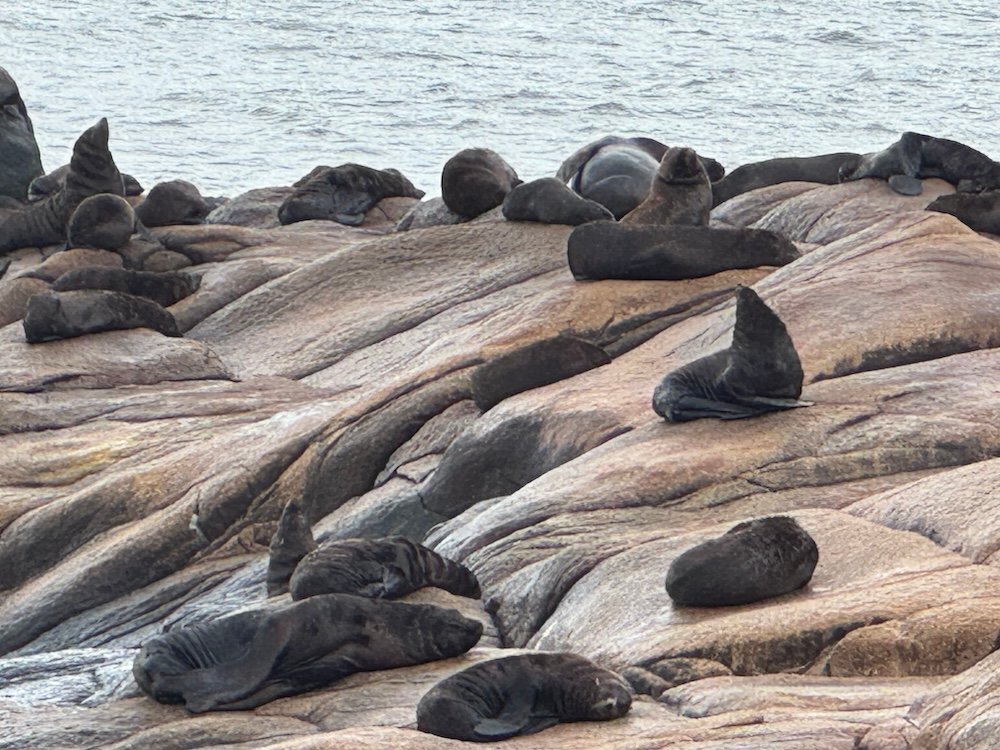
Right nearby the lighthouse is a series of rocks. On these rocks you’ll find a large colony of sea lions. You can’t get too close (both because of warning signs and a fence that has been put up), but you’ll be able to see loads of sea lions here. Even on a cloudy day, they were out lounging on the rocks.
Stroll through Town
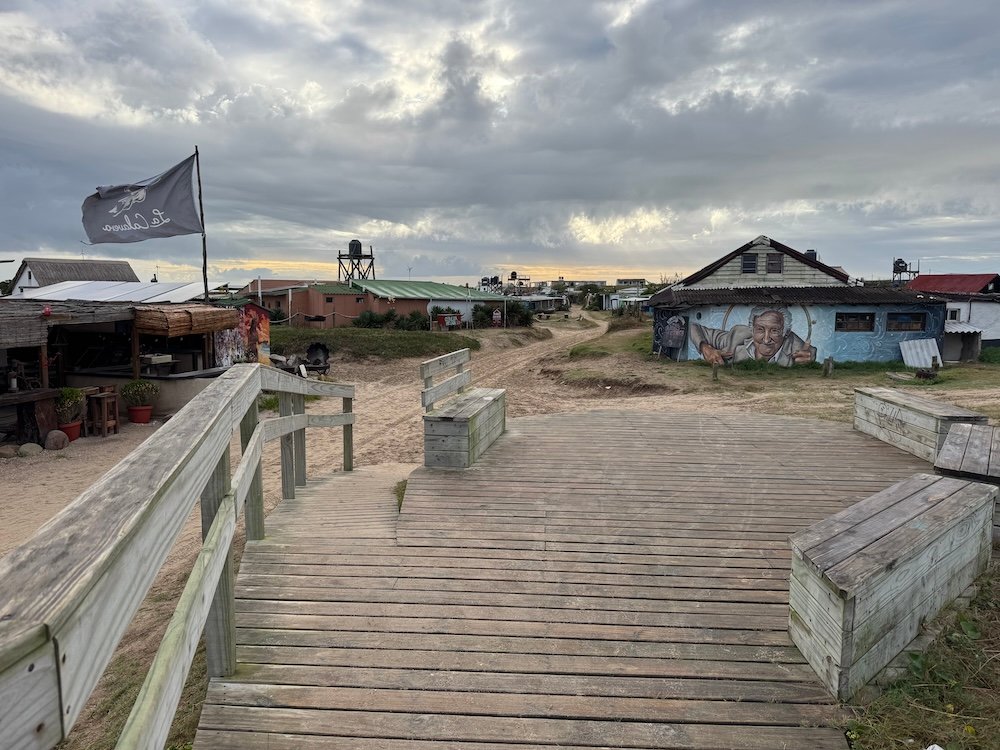
There’s not a lot to see in the town of Cabo Polonio itself, but I still think it’s worth a stroll. Since only authorized vehicles are allowed into Cabo Polonio, you don’t have to worry about traffic. In fact, there aren’t paved roads. It’s sand and gravel making up the few roads (though I think paths is a better descriptor) of town.
You’ll find a few restaurants and cafes, though if you’re like me and visiting in off season (I visited within the first week of March), many places will be closed. Beyond the restaurants, look for the store El Templao. It’s a grocery store, but unlike modern grocery stores, you tell the cashier what you want and he picks it up for you. No picking up and examining every item in this store.
If you’re spending the night in Cabo Polonio, and I really recommend you do, I also suggest taking a walk at night. Bring your phone or some kind of light. There are no street lights in Cabo Polonio so the only lights are those from the generators of the houses and hotels. In addition, several hotels and hostels will lead the path to their front door with candles. It’s a very unique ambiance and you have to experience it while you’re here.
Relax on the Beach
Cabo Polonio is a beach town so at some point, you have to give yourself time to enjoy the beach. Whether that means playing in the water, taking a long stroll down either of the two beaches, or just sitting down with a book, spend some time here.
There are two beaches in Cabo Polonio: Playa Sur and Playa Norte (South Beach and North Beach). In general, I found Playa Sur to be a little nicer than Playa Norte, but if you’re looking for sand dunes and peace, I recommend Playa Norte.
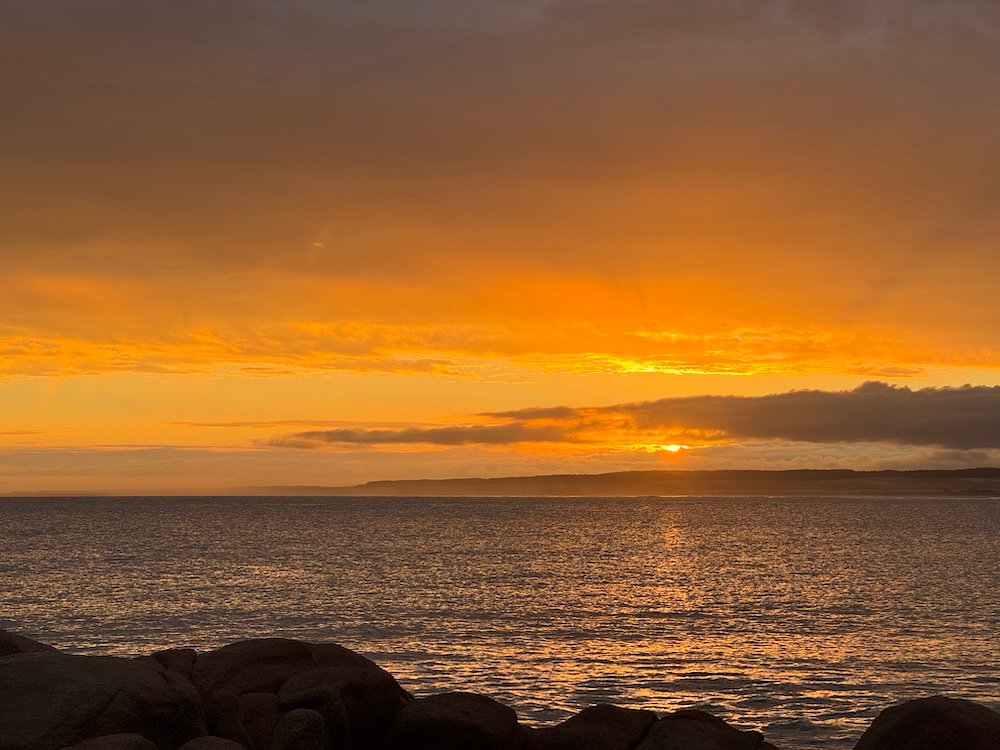
For the sunset, head to Playa Sur. It’s beautiful and one of my favorites that I’ve watched anywhere.
Hike the Sand Dunes
Cabo Polonio is surrounded by sand dunes. You should have already figured this since you’ll be riding a large dune buggy to reach the actual town. But from Playa Norte, you can hike deeper into these dunes. How far you hike is up to you, but since the dunes can be massive, make sure you are aware of where you are and you don’t get lost.
I walked out just a little ways on the dunes. From the top of one dune, I had a great view of the water and onward to the town of Cabo Polonio. The best part? I was all alone.
How Long Do You Need in Cabo Polonio?
I’d try to give yourself at least one full day in town, so you should at least plan to spend the night. After everything it takes to get to Cabo Polonio, it’d be a shame not to experience the area in full. In my mind, that also means experiencing the town at night when the lights are out and candles are what help to light the paths to the hostels.
I stayed for two nights which I think was the perfect amount. I arrived late in the afternoon and had the evening to get a glimpse of Cabo Polonio. The next day, I had a full day to walk the beaches, see the sea lions, and just enjoy the area (though of course I happened to visit on a gray, drizzly day). I spent one more night before leaving very early the next morning to catch a bus to Montevideo. For most visitors, I think this is exactly what you should build into your itinerary.
Lodging in Cabo Polonio
Don’t expect any fancy hotels in Cabo Polonio. Everything in Cabo Polonio is pretty basic and even things like hot water and Wi-Fi are considered amenities, not standard. I say this because it’s super important to set your expectations. In my mind though, that’s one of the unique things about visiting Cabo Polonio.
I stayed at Viejo Lobo Hostel (not to be confused with the also popular Hotel Lobo). It’s a very basic hostel, but they did have Wi-Fi and hot showers. Rooms are small (my private room was tiny and I travelled solo which leads me to believe the dorm rooms are very cramped). There’s a shared kitchen space which was essential as during the low season, many restaurants close their doors.
Final Thoughts
I wasn’t really sure what to expect when I visited Cabo Polonio, but it easily became one of my favorite places in Uruguay. Yes, I’m addicted to Wi-Fi and definitely prefer modern comforts, but the area is so peaceful and unique that I was willing to overlook those things (plus it can be nice to take a bit of a break). It’s hard to describe exactly what makes this area so special, so I highly recommend adding Cabo Polonio to your own Uruguay itinerary and experiencing it for yourself.
Continue Your Adventure
More in Uruguay: Start your journey in the capital city of Montevideo, but don’t skip the historic gem of Colonia del Sacramento. Head east for the “Miami of Uruguay” in the city of Punta del Este. For more beaches, try Punta del Diablo with nearby Santa Teresa National Park.
