
Iconic palaces, breathtaking art museums, and gorgeous cafes are just some of the things you’ll see and experience in Vienna. This city enjoys the finer things in life and that becomes very apparent to all visitors. While it’d be easy to spend your day relaxing and enjoying the cafes, it’s important to get out and see the top sights of this beautiful city.
In this guide, I’ll lay out how I’d recommend you spend two days in Vienna. You’ll see the best of the city making it perfect for first time visitors.
Two Days in Vienna
As always, this is not the only way to spend two days in Vienna, but it’s what I recommend for first time travelers. Rather than planning out every minute of your two days in Vienna, I’ve planned out a day and a half. For your second afternoon in Vienna, you’ll have some free time to tailor your trip to your own interests. Don’t worry though, I’ll give some suggestions for my top picks.
Day One
For the first day of this Vienna itinerary, we start with some of iconic Vienna. Tour the Imperial Apartments of the Hofburg Palace, visit the beautiful Kunsthistorisches museum, and wander through Vienna’s Old Town.
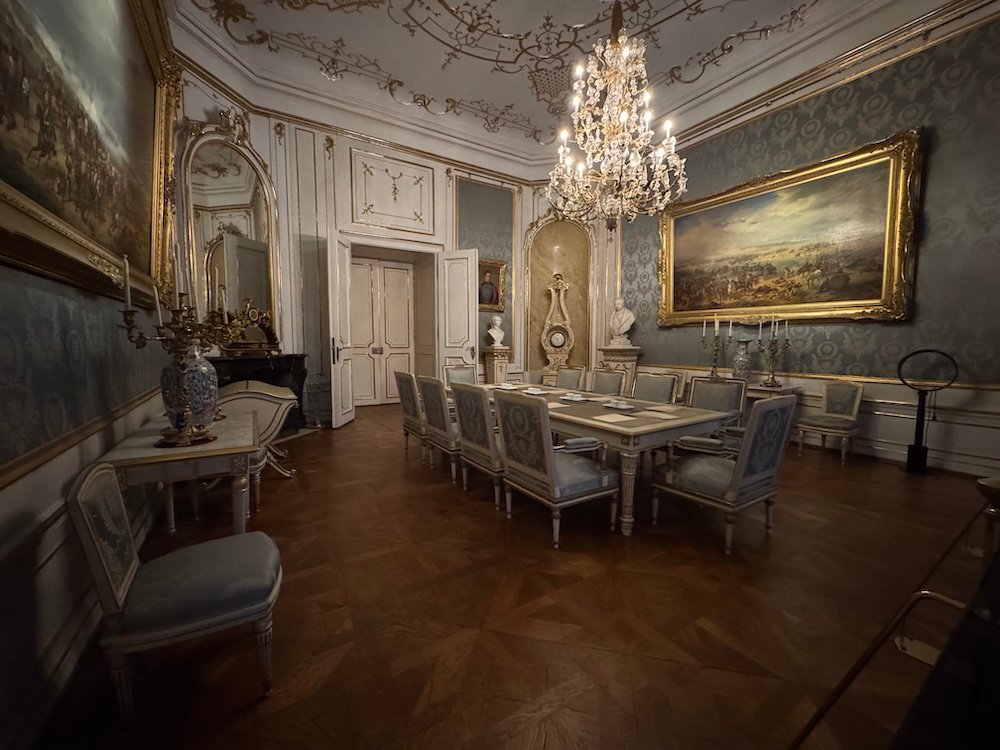
9:00 – Sisi Museum and the Imperial Apartments
Start your day at 9:00 am at the Hofburg Palace. Tickets come with a timed entry, so you’ll want to purchase your ticket online, in advance to guarantee you can enter the museum right when it opens. The Sisi Museum and Imperial Apartments go together, so when you buy your ticket for one, you’ll automatically get entrance into the other.
You’ll start at the Sisi Museum, which tells the story of the famed Empress Elisabeth, better known as “Sisi”. She married Franz Josef and became the Empress of Austria, which she came to loathe. Sisi stepped back from her empress duties and decades later, there’s now a fascination with the Empress who didn’t want to be Empress. After learning about Sisi’s life in the Sisi Museum, from early childhood to her assassination in Switzerland, you’ll move into the Imperial Apartments which give a look inside the living quarters of Sisi and Franz Josef.
Your ticket to the Sisi Museum and Imperial Palace comes with an included audioguide. I found it informative and well put together, but thought that the pacing was off, so it was a bit awkward moving through the museum with the audioguide. That said, it has to be noted that there were renovations at the Sisi Museum during my visit, so things might have felt more chaotic and disjointed because of that.
Learn more and pick up your ticket at the official website.
11:00 – Kunsthistorisches Museum
From the Hofburg Palace, make your way to the Kunsthistorisches Museum. It’s just a short walk away, so there’s no need to bother with public transportation.
The Kunsthistorisches Museum is an art museum that was built to show off the Hapsburg’s art collection to the people of Vienna. While admittedly I’m not a huge art museum fan, I really enjoyed the Kunsthistorisches. Why? It’s the same reason I enjoyed the Louvre in Paris. The building itself is a work of art and the interior might just be my favorite in Vienna.
As you wander the second floor, you’ll work your way through Renaissance paintings, Remembrant self portraits, the largest collection of Pieter Bruegel in the world, and even more. On the first floor, you’ll work your way through other treasures. There’s a large collection of antiquities from Greece and Egypt, as well as some items from the Habsburgs themselves.
Pick up your ticket for the Kunsthistorisches Museum online. You do not need to select a time slot, but it’s 2€ cheaper to purchase your ticket online (even if you do so from your phone while standing outside the door) than it is to purchase it at the museum. Plus there’s a line at the museum and no one wants to wait in a line.
Learn more and pick up your ticket at the official website.
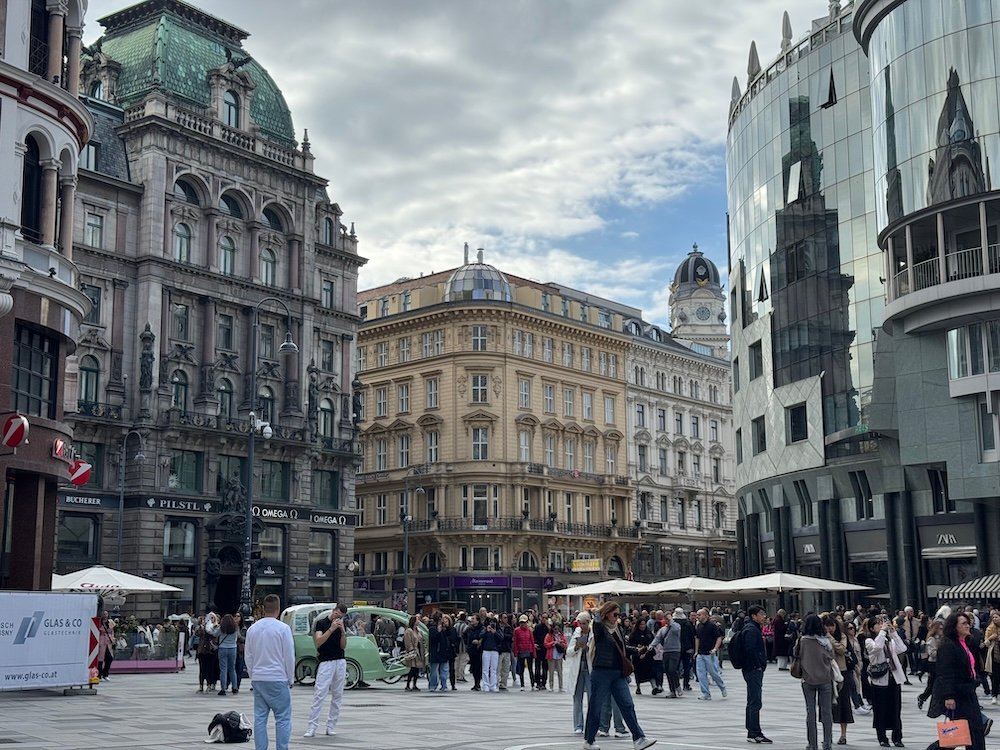
1:00 – Exploring the Old Town
We now make our way to Vienna’s Old Town. If you’re looking to just wander and see some great architecture, this is sure to be one of your favorite parts of the day. I don’t have a set route, but I do have a few sights that you’ll want to make sure you hit as you wander.
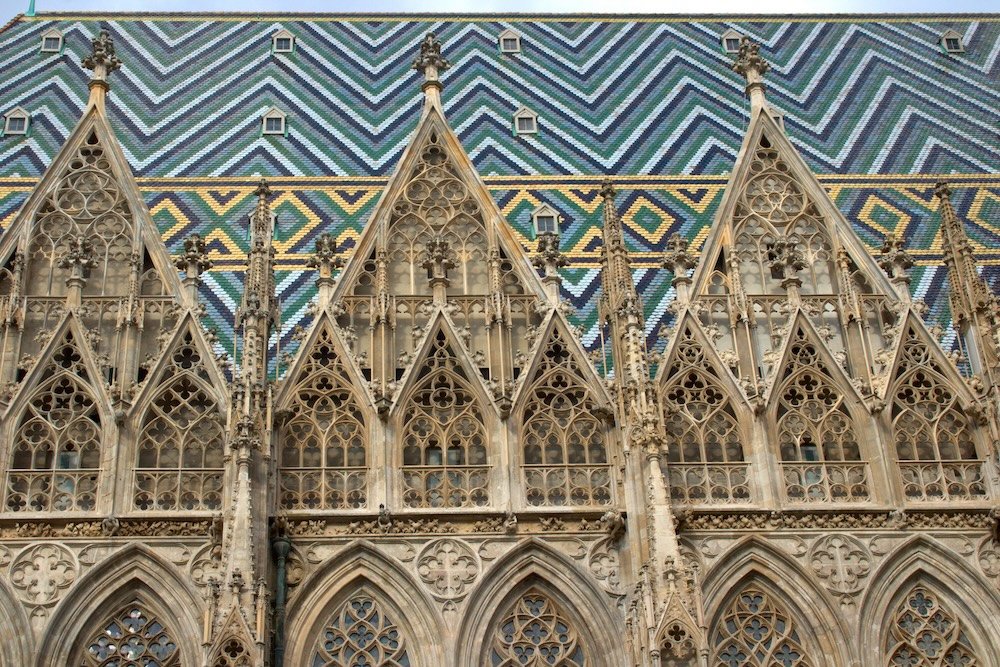
St. Stephen’s Cathedral – This church has become a symbol of Vienna. It’s an impressive gothic cathedral with a beautiful interior. While you can walk into the cathedral for free, you’ll have to buy a ticket to get up close to some of the sights. You’ll also need a separate ticket to climb the tower or visit the catacombs. Personally, I think you can see enough from the free area of the cathedral that you can save your money for another activity.
Column of Pest – This is Vienna’s Plague Monument. Over 75,000 Viennese died when the Bubonic Plague came to the city in the late 1600s. Its said that Emperor Leopold begged God to save the city. His prayers were answered and the monument was built in return.
Michaelsplatz – There’s several squares that run through the old town, including Stephensplatz just outside St. Stephen’s Cathedral. You’ll have already been near here when you visited the Hofburg Palace earlier in the day, but I want to explicitly mention it in case you went straight to the Imperial Apartments/Sisi Museum and didn’t venture beyond.
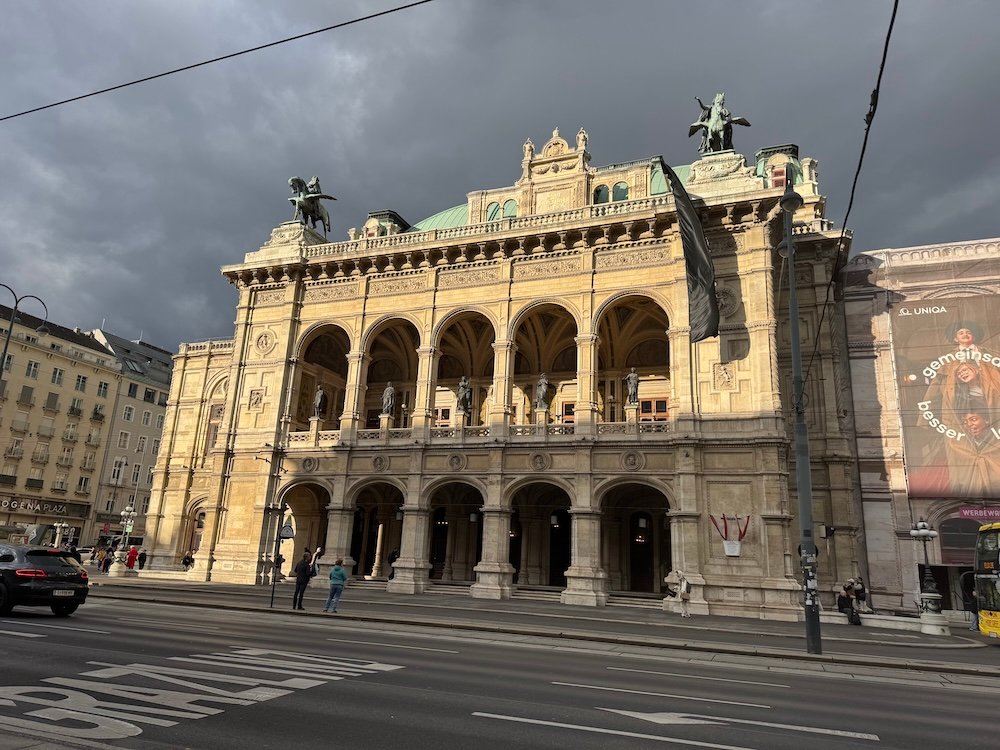
Vienna State Opera – Vienna is famous for its opera and classical music scene. While you could buy tickets to see a show later in the evening, swing by the exterior for a good look. If you want to learn more but don’t want to go to an actual show, you can took into tickets for a tour of the interior.
And if you’re hungry, consider stopping for a quick bite to eat. There’s hot dog stands throughout the Old Town. Yes, it’s a bit pricier than some other areas of Vienna (I noticed a 1.50€ mark up in the Old Town versus where I bought mine just outside Vienna’s Ring), but this is a quick and easy lunch.
2:45 – St. Peter’s Church
As it gets closer to 3:00, head to St. Peter’s Church. It’s situated in the Old Town and it’s my favorite church that I visited in Vienna. While you can appreciate it as just a church, turn your visit into something more by taking advantage of its frequent free organ concerts. Take a quick wander through the church and then have a seat in one of the pews.
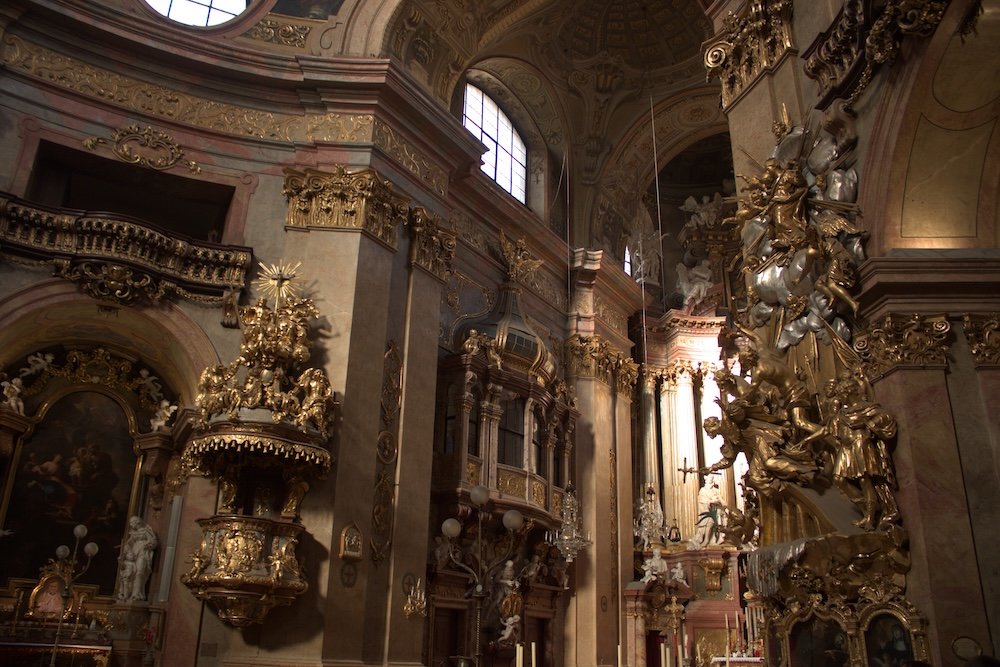
3:00 – Free Organ Concert at St. Peter’s Church
Vienna is famous for its classical music and performances. With two days in Vienna, you don’t have a lot of time. Plus, I know that not everyone enjoys the idea of spending a lot of time on a classical music performance. But still, you’re in Vienna so take the time to catch a performance.
Typically at 3:00 pm, St. Peter’s Church offers a free organ concert. You don’t need a ticket and can just show up. That said, if you arrive after 2:50 or leave within 5-10 minutes of the concert ending, you will pass a person asking for donations. It’s your choice how much you give, but if you pass this person, it seemed like it became a mandatory donation. I arrived very early and took some photos before leaving, so I never ended up being explicitly asked for a donation. Just something to keep in mind.
Check the church’s website for the most up to date information about the various performances. There may be other free performances throughout the day, so look ahead and plan your day accordingly.
3:30 – Relax in a Cafe
After the concert, you have more time to wander through Vienna’s Old Town. Stop by some of the sights that you missed earlier and enjoy wandering the city. Or consider stopping by a cafe for coffee and dessert. The rest of the day is yours.
Day Two
Start your day at Schönbrunn Palace before returning to central Vienna. In the afternoon, it’s traveler’s choice, but I’ll give plenty of options for how to spend your time.
8:30 – Schönbrunn Palace
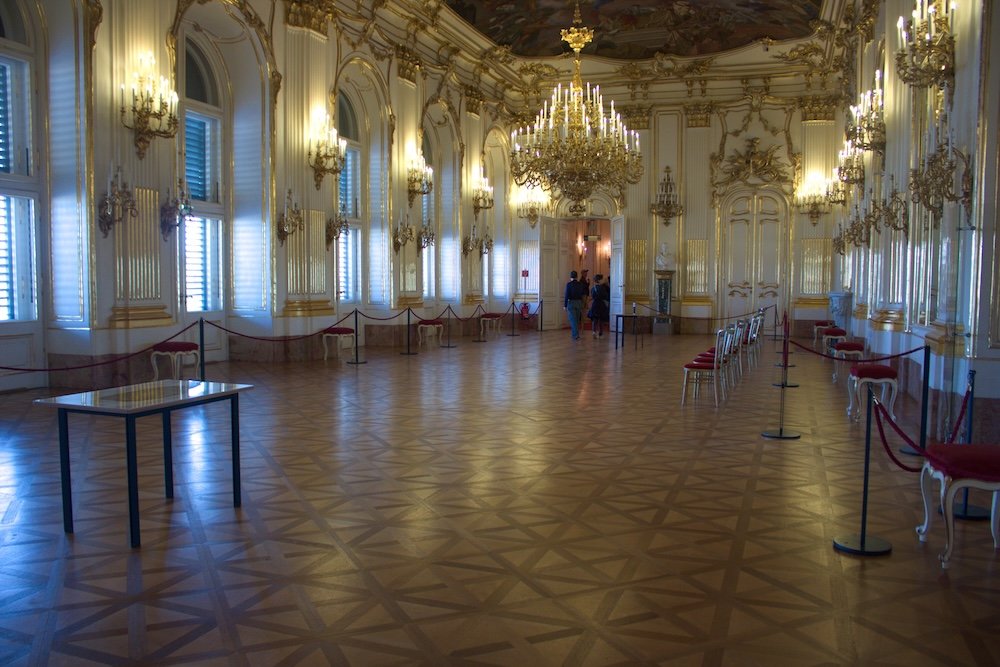
Schönbrunn Palace was the summer residence of the Hapsburgs. While the Imperial Apartments showed where they lived for most of the year, Schönbrunn Palace features their lavish summer residence. It’s so lavish that it’s perhaps the second most impressive palace in all of Europe, second only to Versailles, just outside of Paris. If you like over the top palaces like I do, you’ll love a visit to Schönbrunn Palace.
You’ll want to pick up a ticket in advance. When you do, you’ll pick a time slot and I recommend picking the earliest spot in the day. Arrive early. If your tour is at 8:30, try to arrive a little after 8:00, just to be the first in line and to have a nice view of Schönbrunn Palace without all of the other visitors.
There are several ticket options for Schönbrunn Palace. Since you’re going to be short on time, limit your visit to either the Palace Ticket or the State Apartments Ticket. The Palace Ticket includes all of the rooms as the State Apartments Ticket, but also includes a visit to the Imperial Apartments where Franz Josef and Elisabeth stayed.
I got the Palace Ticket and while the apartments were nice, I think the best part was the first rooms that can be visited by either ticket. The extra rooms included in the Palace ticket only add an extra 20 minutes onto your visit, so it’s your choice which ticket you purchase. Just make sure to purchase your ticket in advance.
Learn more and pick up your ticket at the official website.
9:30 – Schönbrunn Gardens
After touring the interior of the palace, spend an hour wandering the gardens. The gardens at Schönbrunn Palace are expansive and are nice to wander. Whether you walk out to Gloriette for a view back to Schönbrunn Palace or you walk through the trees to enjoy this slice of nature, it’s a great place to be for just a few hours.
While this itinerary doesn’t explicitly include it, there is more to do at Schönbrunn Palace beyond just touring the palace and exploring the gardens. Here’s some more things to consider at Schönbrunn Palace.
Schönbrunn Zoo – Did you know the world’s oldest zoo is here at Schönbrunn Palace? In one area of the gardens, you will find this zoo.
Privy Garden – This garden is tucked away with an additional ticket required, making them a bit less chaotic (especially on busy summer days). You’ll find citrus trees and colorful flowers among the architecture.
The Maze & Labyrinth – While much of the Schönbrunn Gardens are great for just strolling, this area has a focus on fun and games, as the name might suggest.
Orangery Garden – If you’re not burnt out on gardens yet, consider a visit to the Orangery for some of the largest Baroque orangeries in Europe.
Gloriette – While you can walk out for the views alone, you can also visit the cafe here. Where else can you get a view of a palace like Schönbrunn while you enjoy your treat.
Desert Experience House – If you’re tired of Central Europe, visit the Desert House for plants that traditionally thrive in the drier environments in Africa or Australia.
Palm House – This is the green house at Schönbrunn which allowed many rare plants to be cultivated.
Children’s Museum – For those traveling with children, this may be a great option for you.
Note that many of these options will require an additional ticket. If you plan to do any of these, it’s good to look at your ticket options online in advance. You may find some deals if you purchase several activities together.
10:30 – Back to Central Vienna
It’s now time to head back into Vienna. Take the metro line U4 back to the city to continue your exploration. The rest of the the day is traveler’s choice so the exact stop you need depends on what you want to do. In general though, plan for your journey central Vienna to take about 20-30 minutes.
11:00 – Traveler’s Choice
I feel like by this point, we’ve covered the highlights of what every traveler to Vienna should see. Now, it becomes a matter of tailoring the trip to your specific interests. I’ve listed five great below and it’s your choice to figure out what sounds the most interesting to you.
Vienna Opera House – You’ll likely have passed this during your walk of Vienna’s Old Town, but I’m mentioning it again. Look into a tour if you have more time.
Spanish Riding School – Part of the Hofburg Palace, the Spanish Riding School is the place to go to see horse performances.
Belvedere Palace – Originally built by Prince Eugene of Savoy, this former palace became Vienna’s first public art gallery after his death. It continues to function as an art gallery and is home to Gustav Klimt’s The Kiss.
Austrian National Library – If you haven’t gotten your fill of gorgeous Viennese interiors, set your sights on the Austrian National Library.
St. Charles’ Church – If you aren’t burnt out from churches yet, St. Charles’ Church is another great one. While you can tour it during the day, consider enhancing your visit by taking in a chamber music performance at night.
If it were up to me, I’d personally choose the Vienna Opera House. It’s another of Vienna’s great interiors but with opera and classical music being such a big part of Vienna, it just seems appropriate to tour the Opera House.
If I still had time, I’d look at the Austrian National Library and St. Charles’ Church because again, beautiful buildings are what I like. Others may enjoy art and if that’s the case, visiting the Belvedere Palace is likely the best choice. For others, a performance at the Spanish Riding School is the way to go.
We all like different things, so pick what looks most interesting to you for your second afternoon in Vienna.
Is Two Days in Vienna Enough?
I think two days is a great amount of time for a first trip to Vienna. Will you find more things to do if you stayed in Vienna for longer? Absolutely, but if I had more than two days, I’d start looking into day trips from Vienna (Bratislava, Slovakia is a very popular option) or extending a stay in another city.
If you have less than two days, you can enjoy time in Vienna. I’ve written a travel guide for one day in Vienna, but in my opinion, two days in Vienna is better. It just allows you to travel at a less frantic pace and enjoy more of what Vienna has to offer.
Getting Around Vienna
Vienna has buses, trams, and an underground metro station to help you navigate the city. That said, I think it really depends on where you’re staying and what your plans are for the day. If you will just be spending the day within Vienna’s Ring, I don’t think there’s a need for public transportation (unless your hotel is far away from the ring). Everything within this small area of Vienna is incredibly walkable.
Tickets cost 2.40€ per ride for 8€ for a 24 hour pass. If you’ll be taking more than 3 rides in 24 hours, it’s worth it to pick up a 24 hour pass. I found the easiest place to pick up tickets were from a metro station.
Note that you will need to validate your ticket. When entering the metro, tram, or bus, stick your ticket into the reader. If your ticket isn’t validated, it’s not valid and you could risk getting fined. I saw inspectors checking for tickets as people left Karlsplatz metro station one evening and they will fine you if you get caught without a valid ticket. If you have a 24 hour ticket, you only need to validate the first time you use it.
For this two day itinerary, you don’t need public transportation for day one. It’s all within Vienna’s Ring and it’s easy to walk between all of the sights. That said, if your hotel is far outside the Ring and you’ll be taking two journeys to get to and from your hotel, just pick up the 24 hour pass. You’ll probably find some way to take a third ride. For day two, you’ll absolutely want to pick up a 24 hour pass. You’ll need two rides to get to and from Schönbrunn Palace and with the free time later in the afternoon, odds are good you’ll use that third ride.
Getting to Vienna
Vienna is easily connected to many great cities around Europe. Of course you can fly into Vienna, but don’t overlook bus and train connections as well. Here’s some popular options:
Vienna to Salzburg, Austria – 2 hours 30 minutes by train
Vienna to Ljubljana, Slovenia – 5 hours by bus (I used Flixbus)
Vienna to Bratislava, Slovakia – 40 minutes by train, 1 hour by bus (I used the RegioJet bus)
Vienna to Prague, Czech Republic – 4 hours by train
Vienna to Budapest, Hungary – 2 hours 30 minutes by train
For buses, make sure you look carefully at which bus station you’ll be using. When I arrived from Ljubljana, we arrived at Vienna Erdberg. When I left Vienna for Bratislava, my bus departed from the main train station.
When to Visit Vienna
Vienna can be visited all year round. Summers can be hot and busy with plenty of tourists wanting to visit Vienna’s top sights. The summer months are also the most limited when it comes to Opera and the classical music concerts that Vienna is famous for. If this is important to you, make sure you take this into consideration.
In the winter months, there can be less tourists and more options for classical music and opera performances, but it will be the coldest. Spring and fall can be great shoulder seasons.
I visited in mid October and had a great time. Mornings were a bit chilly, but it eventually warmed up into a comfortable weather for exploring. The leaves were also turning colors which made for a great walk through the gardens at Schönbrunn Palace.
Final Thoughts
Two days in Vienna gives you a fantastic introduction to the city. You’ll see a lot of the top Hapsburg sights, but you’ll also be able to make your own customizations to the itinerary, which I feel is super important. Rather than filling all of your time with a list of things you should do, take a little time to focus on the things you love. Enjoy Vienna!
Continue Your Adventure
Vienna, Austria: If you have more time, consider spending one days in Vienna. Learn how to budget your trip with my Vienna Travel Budget.
Nearby: Many visitors combine a trip to Vienna with Budapest, Hungary which is just three hours by train. For a day trip from Vienna, look into Bratislava, Slovakia.
Itineraries: Loop Vienna together with several other great cities in this Central Europe 2 week itinerary or this 10 day Central Europe itinerary.
More in Europe: Vienna is just one of many great cities in Europe. Paris is one of my favorites, but Amsterdam can also be fun. For an easy first trip, try visiting London.
